Small RNA and oligonucleotide drugs do not merely bind proteins and wait for physiology to answer. They enter the grammar of gene regulation itself, where sequence, structure, intracellular trafficking, and tissue-selective delivery together determine whether a medicine behaves like a scalpel, a whisper, or an unintended systems perturbation.
Because of that, evaluating drug-drug interactions for these agents cannot rely on the old pharmacology playbook alone. The central question is no longer just whether a therapy inhibits a cytochrome enzyme or blocks a transporter, but whether it perturbs endogenous RNA networks, shifts target-organ physiology, or changes the cellular machinery that other drugs silently depend on.
When Drugs Speak RNA
The modern oligonucleotide drug is a molecular argument against the old belief that therapeutics must mainly work through proteins accessible to classical chemistry. Aptamers, antisense oligonucleotides, and small interfering RNAs act one layer earlier, at the level of transcript recognition, transcript destruction, splice redirection, or protein neutralization through highly structured nucleic acid binding. That shift matters because it expands the druggable landscape from the familiar terrain of enzymes and receptors into the much larger regulatory architecture of RNA biology. In practical terms, this is why diseases once regarded as pharmacologically elusive have become tractable through sequence-based design rather than ligand discovery in the traditional sense.
Yet the same feature that makes these drugs elegant also makes them difficult. Native oligonucleotides are chemically fragile, highly charged, and too hydrophilic to cross lipid membranes efficiently, which means an unmodified sequence is usually less a medicine than a rapidly degraded biochemical idea. The field therefore advanced not by discovering RNA alone, but by learning how to armor it with phosphorothioate backbones, ribose modifications such as 2′-O-methyl and 2′-fluoro substitutions, morpholino frameworks, PEGylation, GalNAc conjugation, and lipid nanoparticle packaging. These interventions changed not only stability but tissue exposure, intracellular uptake, plasma protein binding, duration of action, and the very meaning of pharmacokinetics for the class.
The approved products illustrate how much the modality has diversified without abandoning its molecular logic. FDA-approved oligonucleotide medicines now span aptamers for retinal disease, antisense agents for viral infection, neuromuscular disease, amyloidosis, dyslipidemia, hereditary angioedema, and hematologic disease, as well as siRNA drugs for transthyretin amyloidosis, porphyria, hyperoxaluria, hypercholesterolemia, and hemophilia. Recent FDA actions include fitusiran for hemophilia and donidalorsen for hereditary angioedema, underscoring that the pipeline is not merely active but maturing into multiple clinical franchises. Even inclisiran’s label evolution reflects how oligonucleotide drugs are moving from niche genetic medicine toward broader chronic disease management.
Accordingly, oligonucleotide pharmacology must be read less as a variant of small-molecule pharmacology than as a hybrid discipline joining medicinal chemistry, cell trafficking, RNA biology, and target-organ physiology. A plasma concentration may say little about what matters if the decisive events occur inside hepatocytes, motor neurons, retinal compartments, or intrathecal spaces over prolonged periods. The field therefore keeps returning to a difficult truth: for RNA drugs, exposure in blood is often the least interesting part of the story. From that realization emerges the central challenge of interaction science, because once plasma stops being the dominant map, the real terrain becomes tissue-specific biology.
Chemistry Becomes Disposition
The chemistry of oligonucleotide drugs is not a cosmetic refinement layered onto a preexisting active ingredient; it is the operating system of the drug itself. A phosphorothioate backbone can increase nuclease resistance and plasma protein binding, which in turn extends circulation, broadens tissue distribution, and reduces rapid renal loss, but it may also alter potency, off-target exposure, and toxicity patterns. A GalNAc ligand can redirect the same silencing logic toward hepatocytes through the asialoglycoprotein receptor, while PEGylation can slow clearance and prolong residence in a confined compartment such as the vitreous. In this class, medicinal chemistry and biodistribution are inseparable.
This is why two oligonucleotide drugs that look conceptually similar may behave very differently in patients. A phosphorodiamidate morpholino oligomer used for Duchenne muscular dystrophy can remain largely intact and be excreted substantially as parent compound, whereas a phosphorothioate gapmer may undergo progressive exonuclease trimming while remaining strongly tissue-associated for long intervals. A GalNAc-conjugated siRNA may show strikingly efficient liver delivery after subcutaneous dosing, while an intrathecal antisense agent must be interpreted through cerebrospinal fluid distribution and neural tissue persistence. The usual shorthand of absorption, distribution, metabolism, and excretion still applies, but the mechanistic content of each word is rewritten by backbone physics and delivery architecture.
The resulting pharmacokinetic profiles often refuse to align neatly with pharmacodynamic outcomes. Oligonucleotide drugs can show brief systemic presence yet durable target suppression, because intracellular loading, endosomal escape, tissue retention, and catalytic or semi-catalytic biological mechanisms allow their effects to outlast measurable circulating concentrations. This decoupling is particularly important for siRNA therapeutics, where a loaded guide strand within the RNA-induced silencing complex can continue to direct mRNA cleavage long after conventional plasma sampling would suggest the drug is nearly gone. Dose selection therefore cannot be built on concentration alone; it must be anchored to transcript knockdown, protein reduction, or clinically meaningful biomarker behavior in the relevant organ.
Consequently, the interaction problem begins before any second drug is added. The first question is whether the oligonucleotide’s chemistry has already created a reservoir, a targeting bias, or a prolonged intracellular effect that distorts the usual relationship between coadministration timing and biological overlap. The second is whether the delivery vehicle, linker, or conjugated ligand carries liabilities of its own that the parent sequence does not explain. And so the field moves from structural elegance into systems complexity, because once chemistry dictates disposition, disposition starts dictating the kinds of interactions that matter.
The Interaction Problem Rewritten
For most small molecules, drug-drug interaction assessment begins with enzymes and transporters. Investigators ask whether a new compound is a substrate, inhibitor, or inducer of major cytochrome P450 pathways, whether it alters transporter flux, and whether a predictable exposure change follows from those effects. Oligonucleotide drugs often sit outside that logic, because they are commonly processed by endo- and exonucleases rather than CYP enzymes and are frequently internalized by endocytosis or receptor-mediated uptake rather than by canonical transporter pathways. That alone does not make interactions irrelevant; it changes their center of gravity.
A more relevant danger is pharmacodynamic interaction, particularly when the oligonucleotide changes a pathway that another drug also depends on, even if they do not share a molecular target. Fitusiran is a vivid example of how lowering antithrombin to rebalance coagulation can create a narrow physiological corridor in which concomitant hemostatic therapies must be handled with unusual care. Likewise, a liver-directed silencing drug that shifts lipoprotein handling, complement activity, or heme-related biology can change the behavior of a second medicine through altered tissue physiology rather than classical metabolic inhibition. The interaction is real, but it is written in function rather than in enzyme occupancy.
The field has already seen hints that conventional screens can miss clinically meaningful effects. FDA guidance on oligonucleotide therapeutics emphasizes that pharmacodynamic endpoints, organ impairment studies, immunogenicity assessment, and target-tissue understanding are essential because standard in vitro CYP and transporter assays may not adequately predict clinically relevant liabilities for this modality. The published literature further argues that even when enzyme-based interaction studies are negative, target-mediated changes in cellular physiology may still influence coadministered drugs in ways that become visible only in clinical settings or in disease-relevant human models. This is the point at which interaction science stops being a checklist and becomes a problem of mechanistic inference.
Therefore, the right framework for oligonucleotide interactions is not narrower than the classical one but broader. It must include the parent sequence, its shortened metabolites, the conjugated ligand, the formulation components, the route of administration, the target organ, the durability of intracellular action, and the physiology downstream of successful target engagement. Once that broader map is accepted, the next challenge comes into view with greater clarity, because the most intriguing interaction risk may not involve drug metabolism at all. It may arise from competition within the endogenous RNA circuitry that cells use to regulate themselves even in the absence of therapy.
Endogenous Competition
The most conceptually disruptive interaction hypothesis in this field is also the most biologically plausible: therapeutic small RNAs may compete with endogenous small RNAs for shared cellular machinery. SiRNA drugs rely on components of the RNA interference pathway, especially Argonaute-centered silencing complexes, to recognize complementary transcripts and execute cleavage. But endogenous microRNAs already occupy this machinery as part of ordinary post-transcriptional gene regulation, including regulation of genes relevant to absorption, metabolism, transport, and downstream pharmacodynamic response. A therapy that enters this system is not stepping onto an empty stage.
That possibility has major implications for interaction science. If an exogenous siRNA alters access to Argonaute proteins, influences strand loading, perturbs RISC availability, or shifts the kinetics of endogenous microRNA function, then the abundance of proteins governing drug handling or pathway response could change without any direct binding between the oligonucleotide and the coadministered drug. The interaction would then be mediated by a regulatory detour through cellular RNA homeostasis. This is precisely why the most sophisticated concerns in oligonucleotide development now extend beyond off-target hybridization toward pathway competition, small-RNA ecology, and the stability of gene-regulatory networks under therapeutic load.
The challenge deepens for emerging modalities or designs that engage earlier steps in RNA biogenesis. Short hairpin RNAs and related constructs may compete for exportin-5, Dicer, or other processing nodes that endogenous microRNAs need for maturation and trafficking, creating the possibility of broader disturbance in RNA regulatory architecture. Even where currently approved siRNA designs are optimized to reduce dependence on some of these upstream steps, the conceptual lesson remains important: the closer a therapy moves toward the machinery of small-RNA biology, the more interaction assessment must examine not only target knockdown but collateral pressure on the host’s own regulatory apparatus. That means better spatial assays, better temporal assays, and better human-relevant models than the field has traditionally used.
What emerges, then, is not a warning against RNA therapeutics but a sharper picture of their maturity. These medicines are no longer experimental curiosities; they are clinically validated interventions that have proven they can reshape neurology, hepatology, hematology, retinal disease, and metabolic medicine. Precisely because they work so well at the level of regulatory biology, they demand an interaction framework that is equally fluent in chemistry, cell biology, and systems pharmacology. And that is where the field now stands: not at the end of oligonucleotide medicine’s rise, but at the beginning of learning how to measure its full consequences with the precision it deserves.
Study DOI: https://doi.org/10.3389/fphar.2025.1720361
Engr. Dex Marco Tiu Guibelondo, B.Sc. Pharm, R.Ph., B.Sc. CpE
Editor-in-Chief, PharmaFEATURES
Subscribe
to get our
LATEST NEWS
Related Posts

Drug Discovery Biology
Proteolytic Rewriting: Engineering Controlled Absence of Pathogenic Protein Persistence
Targeted protein degradation transforms drug therapy by engineering the cellular machinery to erase, rather than merely inhibit, pathogenic proteins.
Drug Discovery Biology
Open Nucleotides: Grant-Driven Infrastructure for Equitable mRNA Vaccine Manufacturing
By developing accessible cap analogs and RNA raw materials, Hongene Biotech, guided by David Butler’s expertise in nucleotide chemistry and supported by the Gates Foundation, is reshaping the molecular infrastructure that underpins global mRNA vaccine equity.
Drug Discovery Biology
Redox Messengers: How Endogenous Gasotransmitters Rewire Vascular Biology to Resist Age-Driven Oxidative Stress
Gasotransmitters provide a biologically sophisticated means of counteracting age-related oxidative stress and preserving vascular resilience.
Drug Discovery Biology
Aptamer Signal Dynamics: Engineering Nucleic Acid Recognition Systems for High-Fidelity, Multi-Modal Biosensing
Aptamers redefine biosensing by pairing programmable molecular recognition with versatile transduction strategies capable of detecting clinically relevant biomarkers with exceptional fidelity.
Read More Articles


Medicinal Chemistry & Pharmacology
March 12, 2026
Leaner Molecules: Structural Simplification Outperforming Brute-Force Potency Potency Chasing in Lead Optimization
Structural simplification is the science of turning chemically overbuilt leads into more efficient, drug-like molecules without surrendering their therapeutic logic.

Artificial Intelligence and Data Analytics
March 11, 2026
Digital Stewardship: Governing Access, Transparency, and Accountability in Clinical Data Warehouses
Clinical data warehouse governance determines how integrated health data can be responsibly accessed, shared, and reused to enable modern biomedical research.
Medicinal Chemistry & Pharmacology
March 10, 2026
Pocket Alchemy: Automated Structure-Based Design Rewrites Molecular Invention Logic
Structure-based de novo drug design is the science of teaching algorithms to imagine molecules under the hard constraints of protein geometry and real-world chemistry.
Immunology & Oncology
March 9, 2026
Oncology Rewired: Molecularly Precise Therapeutics Redefining the Architecture of Cancer Treatment
Emerging cancer therapies are redefining treatment by targeting the molecular circuitry, immune interactions, and metabolic vulnerabilities that allow tumors to survive and evolve.
Medicinal Chemistry & Pharmacology
March 6, 2026
Algorithmic Therapeutics: Artificial Intelligence Reshaping Biotech Drug Discovery and Product Development
Artificial intelligence is transforming biotech by making therapeutic discovery less like screening for luck and more like engineering across molecules, biologics, and delivery systems.

Chemistry, Manufacturing & Controls
March 4, 2026
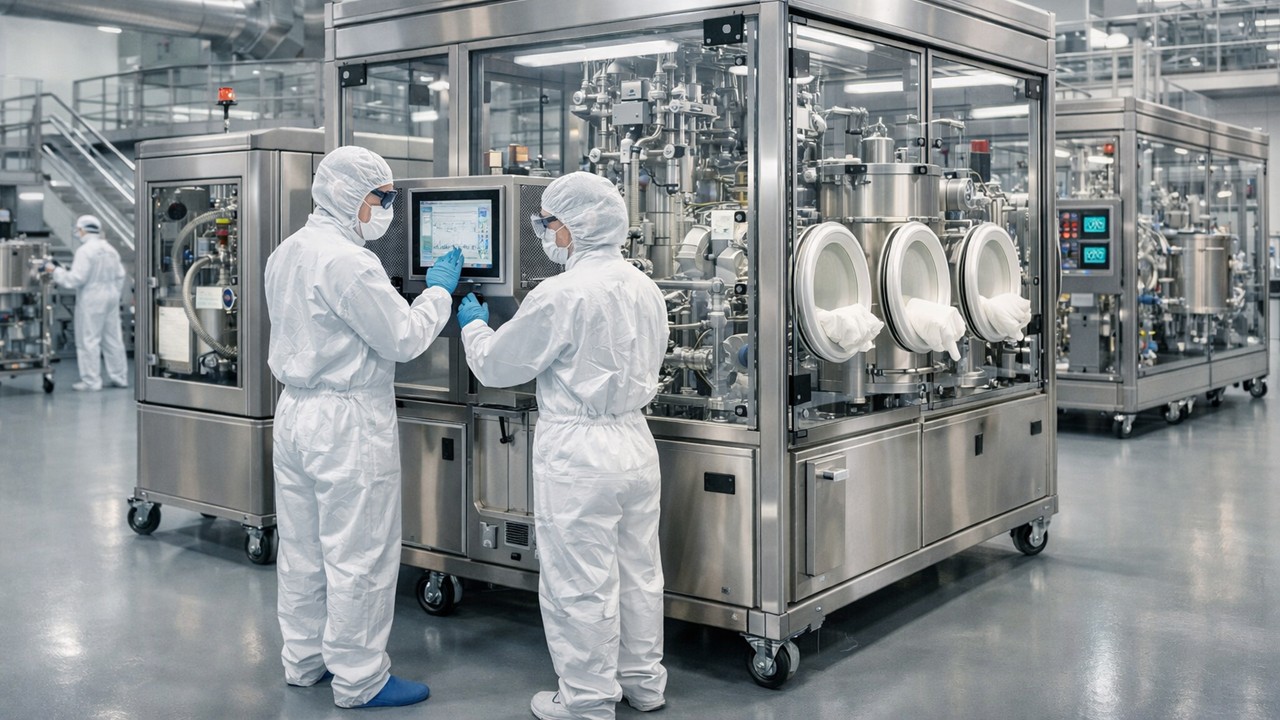
Factory Logic: Modular Pharmaceutical Manufacturing Enabling Rapid Drug Production and Continuous Innovation
Modular pharmaceutical factories transform drug manufacturing into a continuously evolving technological system capable of integrating new therapies, processes, and production innovations without disrupting regulated operations.