Wiring Intelligence into Utility: Why Energy Monitoring Matters More Than Ever
Inside biomanufacturing facilities, precision is not merely a regulatory requirement—it’s the lifeblood of every pipetted reaction, incubated cell line, and downstream separation process. But often overlooked in this tightly controlled universe is the energy that powers it all. Until recently, energy use was viewed as a background actor—unseen, unfelt, but presumed constant. However, escalating sustainability pressures and high-variability energy demands across unit operations have forced industry leaders to reconceive energy not as passive infrastructure, but as a dynamic variable in process performance. Every stirred-tank bioreactor, cold-chain module, and chromatography skid has its own energetic fingerprint, and this heterogeneity makes static metering both insufficient and obsolete. Real-time energy monitoring is now rewriting how biomanufacturing facilities perceive, control, and even predict their energetic behavior.
It is not merely about knowing how much electricity a process consumes but about decoding when, where, and why spikes or troughs occur—and then adapting intelligently. In highly sensitive systems such as perfusion culture or continuous purification, transient drops in energy can impact gas flow rates, pressure stabilization, or even compromise batch integrity through thermal instability. These errors, while minute in conventional terms, can cascade into multimillion-dollar losses when applied to monoclonal antibody production or mRNA vaccine synthesis. Thus, the role of energy has transitioned from a facility manager’s domain to a quality engineer’s dashboard. This evolution is not theoretical; it’s encoded in the architecture of modern biomanufacturing control rooms, where energy meters now share screen space with real-time quality attribute graphs.
The biomanufacturing revolution demands that energy be reframed not as a utility expense, but as a biochemical cofactor. As bioreactors scale from benchtop to 20,000-liter systems, their thermal and electrical demands morph from predictable to probabilistic. Pumps behave differently under fluctuating voltages, clean-in-place (CIP) systems react to steam pressure differentials, and HVAC loads spike under sudden shifts in facility humidity or door-opening frequency. Each of these subtle perturbations contributes to energy noise, which, if left unmonitored, obscures root cause analysis when deviations emerge. Real-time monitoring introduces not just visibility but traceability, aligning energetic flux with specific unit operations in both space and time.
Indeed, pharmaceutical quality-by-design (QbD) frameworks are increasingly incorporating energy flow maps into process validation plans. This isn’t energy auditing for compliance; it’s energetic modeling for process robustness. Engineers are designing feedback loops where sensor-triggered energy events feed back into automated control logic—effectively closing the loop between process and power. The vision is a living facility that dynamically reallocates energy across units based on predictive throughput, phase of production, or even reagent volatility. What was once reactive energy management becomes prescriptive optimization, marking a fundamental shift from retrospective accounting to anticipatory resilience.
The Architecture of Awareness: Digital Twins and Sensor Fusion
The frontier of energy intelligence begins not with consumption data but with context-aware instrumentation. Modern biomanufacturing plants are integrating advanced sensor arrays that go beyond kilowatt readings to include thermal flux density, transient phase noise, and power factor harmonics. These measurements form the atomic inputs of digital twins—real-time, virtual representations of physical bioprocess units. Within these models, engineers simulate energy drift across fermenters, HVAC zones, and cold-chain modules with molecular precision, identifying anomalies long before the physical world registers them. These are not static simulacra; they evolve continuously with incoming data, creating a recursive feedback mechanism where the model informs the real and vice versa.
Sensor fusion—the methodological integration of diverse sensor types—has catalyzed the accuracy of these systems. An amperometric reading from a cooling compressor might be meaningless in isolation but gains diagnostic power when fused with barometric pressure from cleanroom sensors and frequency distortions in a power distribution board. The real power of real-time energy monitoring lies not in the individual sensor, but in the networked awareness it builds. By establishing data concordance across spatially distributed points, the system begins to develop a form of synthetic intuition—flagging energy instability not just by absolute thresholds but by behavioral deviation.
This architecture becomes especially critical in single-use biomanufacturing platforms, where process configurations shift between runs and energetic profiles are no longer predictable across batches. Here, the digital twin does not merely simulate the equipment but adjusts to different tubing lengths, reactor geometries, and fluid viscosities—each altering the energy load profile of a given step. It’s not just about plugging in sensors; it’s about educating the system to understand what the sensors mean in real-world bioprocessing terms. With enough data, even minor anomalies—a barely perceptible lag in pump motor recovery—become early indicators of fouling, miscalibration, or contamination risk.
The computational burden of such models is nontrivial, and cloud-based platforms have risen to meet this challenge. These platforms allow scalable energy models to be hosted, updated, and compared across multiple facilities globally. This infrastructure permits not just facility-level optimization but enterprise-level benchmarking, where best-performing energy configurations in one plant can be virtually transplanted into another. Over time, this creates a translatable energetic playbook—a codified repository of “what works” in real-time energy allocation under variable biological and operational loads.
Ultimately, sensor fusion and digital twins represent a departure from manual oversight to autonomic control. Instead of engineers adjusting valves or rerouting circuits post-deviation, the system does it for them, based on probabilistic logic weighted by both historical data and predictive modeling. This shift not only reduces human error but frees technical staff to focus on high-level process innovation rather than reactive troubleshooting. Real-time energy monitoring, then, becomes not an overlay but a core layer in the fabric of intelligent manufacturing.
Bioreactors as Energy-Responsive Entities
In classical biochemical engineering, a bioreactor is a vessel of transformation—a place where substrates yield products under tightly regulated physicochemical conditions. But in the era of real-time energy monitoring, the bioreactor is no longer a passive recipient of utility—it’s an energy-responsive organism. Heat generation, oxygen mass transfer, and agitator torque all exhibit dynamic interactions with electrical load, and these interactions differ vastly between batch, fed-batch, and perfusion configurations. Monitoring these variables in real time permits the energetic fingerprinting of each operation—a map of how energy contours the molecular journey from inoculation to harvest.
During exponential growth phases in microbial fermentation, for example, oxygen demand surges, driving up compressor loads and consequently the energy draw of the entire aeration system. A real-time system detects not just the increased load but aligns it with pO₂ control loops, revealing how energy usage is tethered to gas-liquid mass transfer efficiency. At this intersection, energy ceases to be a downstream measurement and becomes a co-variable in upstream performance. Through power waveform analytics, engineers can even detect incipient fouling of spargers or filter clogging long before pressure sensors trigger alarms.
Agitation, often considered a mechanical concern, also exhibits rich energy dynamics. As viscosity changes during cell proliferation or polymer accumulation, motor load increases—a behavior invisible to batch-to-batch monitoring but acutely detectable in real-time systems. These patterns are valuable not just for diagnosis but for prediction: energy behavior during early run phases can now forecast mid-run instability, enabling preemptive correction. This data-centric agility redefines bioreactor control—not merely by temperature and RPM, but by holistic energy signature.
Fed-batch and perfusion systems, with their variable nutrient feeding profiles, generate nonlinear energy demands that traditional energy meters cannot capture. Real-time monitoring, however, maps the energetic inflections caused by nutrient bolus, valve actuation, and filtration oscillations. This data enables fine-tuned energy modeling that can recommend staggered feeding schedules or multi-pump sequencing to flatten demand curves. By smoothing these energetic rhythms, plants avoid demand spikes that would otherwise trigger costly facility-wide load shedding or power factor penalties.
Perhaps most intriguingly, energy monitoring is revealing new dimensions of process fingerprinting. Subtle changes in energy draw patterns can now indicate process variability due to media inconsistencies, cell line drift, or even environmental biofouling. Energy becomes a process analytical technology (PAT) surrogate—not in competition with spectroscopy or chromatography, but as an orthogonal readout that augments process understanding. This transforms the bioreactor into an energetic informant—a vessel that not only ferments but narrates its own power story.
HVAC and Cleanroom Synergies: The Hidden Giants of Energy Flux
Among the most energy-intensive systems in biomanufacturing are not the bioreactors or downstream columns, but the HVAC and cleanroom infrastructures that protect them. These systems, designed to maintain Class 100 or Class 1000 environments, operate under non-negotiable constraints: airflow must remain laminar, pressure differentials must hold, and temperature-humidity envelopes must remain within strict bounds. The slightest deviation can compromise sterility assurance or disrupt temperature-sensitive operations. But the energy cost of this constancy is immense and difficult to optimize—unless monitored in real time.
Real-time energy monitoring in HVAC systems begins with zone-by-zone load analysis. Each cleanroom’s energy profile differs not just by square footage but by occupancy dynamics, equipment heat output, and door-opening frequency. With real-time data, facilities can track how a transient personnel movement in a Grade B corridor impacts fan speed modulation or chiller ramp-up in adjacent rooms. This level of granularity exposes inefficiencies masked by averaged data, permitting surgical adjustments to damper positions or airflow cascade logic.
Moreover, HVAC control loops can now be co-optimized with process triggers. If a freeze-drying cycle is set to begin in 30 minutes, the system pre-chills only the relevant zone rather than the entire corridor network. Energy becomes anticipatory rather than reactive. Smart scheduling, informed by real-time load forecasting, aligns HVAC dynamics with production timing—not just for compliance but for consumption parity. Such alignment is impossible without instantaneous data flows from energy monitors embedded within air handlers, VAV boxes, and chilled water loops.
One overlooked benefit of HVAC energy monitoring is failure mode anticipation. Many catastrophic deviations—like HEPA filter collapse or pressure backflow—begin with anomalous power behavior. A compressor that draws slightly more current than normal over time may signal refrigerant leakage, while oscillating power factors could indicate a failing sensor array. By flagging these deviations as early warnings, facilities can schedule maintenance before contamination events or system shutdowns occur.
Cleanroom infrastructure is also becoming a canvas for machine learning models trained on energy signatures. Algorithms correlate particulate counts, door access logs, and energy fluctuations to predict bio-risk events or aseptic protocol violations. These models, once verified, can even issue proactive alerts to quality control teams or initiate SOP-mandated corrective workflows. This positions HVAC energy monitoring not as a background function but as a strategic component of quality risk management.
Ultimately, the synergy between HVAC control and real-time energy feedback loops defines the modern cleanroom not just as a sterile space—but as an energetically sentient environment. In this setting, energy monitoring is not a checkbox—it is the nervous system through which the cleanroom senses, adapts, and responds to its bioprocessing mission.
Downstream Processing and the Power of Precision
Downstream operations—ultrafiltration, chromatography, and formulation—are often regarded as the polishing phase of biomanufacturing, where purity and potency are fine-tuned. Yet these steps also represent some of the most volatile energy demand zones due to their dependence on high-pressure pumps, centrifuges, and cryogenic systems. The variability of product viscosity, filter loading, and solvent temperature significantly affects energy consumption, often with unpredictable outcomes. Real-time energy monitoring brings this unpredictability into the light, providing facility managers and process engineers with a second-by-second picture of consumption dynamics. This transforms downstream operations from reactive troubleshooting zones into proactive control landscapes.
Take ultrafiltration: as product concentration increases across time, membrane resistance rises, forcing pumps to work harder. Traditionally, the system responds to pressure setpoints, but this ignores the subtleties of motor load behavior. A real-time monitor, tracking torque and harmonic distortions in the power signal, can detect fouling trends before permeate flux drops. This allows for timely filter exchange or flow reversal—both decisions now informed by energy behavior rather than flow rate alone. The result is fewer interruptions, more predictable run times, and better equipment longevity.
In chromatography, mobile phase composition alters pump energy draw with every buffer exchange. Real-time energy feedback can now track not just the volume pumped but the viscosity and compressibility of the fluid, adjusting motor speed profiles accordingly. This form of energetic fine-tuning reduces wear on pumps, eliminates cavitation risks, and harmonizes step transitions in multi-column continuous chromatography setups. Furthermore, the energy signature of elution peaks—when tied to UV and conductivity signals—provides an additional quality readout, enabling better correlation between power dynamics and product recovery.
Formulation and fill-finish stages also benefit from high-fidelity energy data. Clean-in-place (CIP) and steam-in-place (SIP) systems, often triggered by procedural timing rather than real need, can be optimized through real-time heat exchanger and flow monitoring. If energy signatures show suboptimal heat recovery or extended idle power drain, systems can intelligently reroute condensate or throttle back steam injection. These micro-adjustments aggregate into macro-scale energy savings without compromising aseptic integrity or equipment sanitation.
Cryogenic operations, especially for cell and gene therapies, pose another complex energy problem. Liquid nitrogen production and storage systems exhibit sensitive phase transition behaviors that drastically affect energy consumption. By integrating real-time thermodynamic profiling with energy monitoring, facilities can minimize vapor loss, optimize dewar filling schedules, and avoid boil-off triggers. This level of detail is invisible to conventional energy audits but vital for process economics and biological integrity.
In the downstream arena, where product value is highest and deviation costs most severe, real-time energy monitoring becomes a critical tool in the operational toolkit. It aligns cost management with quality assurance, ensuring that precision does not come at the price of unpredictability. The facility becomes more than just a processor—it becomes a steward of energetic discipline, governing the final stages of bioproduction with algorithmic finesse.
From Data to Doctrine: Institutionalizing Energy Intelligence
The implementation of real-time energy monitoring does not end with installation—it begins a journey of cultural and operational transformation. For biomanufacturing facilities to extract real value, the data must be institutionalized into decision-making frameworks, training protocols, and even regulatory narratives. Energy monitoring ceases to be a technical feature and becomes a mindset—one where engineers, operators, and executives alike are fluent in its implications. This transition demands not only tools but language, policy, and habit.
At the policy level, standard operating procedures (SOPs) now embed energy thresholds as critical control points, not just quality markers. Deviations from expected energy signatures are interpreted with the same seriousness as out-of-spec pH or temperature. For regulators, this adds a layer of transparency and defensibility, especially in investigations where process drift or contamination is suspected. A facility that can show tight energetic control demonstrates process understanding and reproducibility—a core requirement of modern good manufacturing practices.
Operationally, energy dashboards are being democratized. What was once reserved for facilities engineering is now visible to line supervisors, QA teams, and batch reviewers. By exposing real-time energy data across the organizational stack, silos dissolve and a shared operational awareness emerges. Technicians learn to interpret abnormal energy curves; quality managers use power signatures to cross-validate root cause analyses; and supply chain officers predict utility fluctuations that may affect batch scheduling. This organizational fluency turns energy into a collaborative variable—co-owned across functions.
Training programs, too, are evolving. Engineers are now taught not only thermodynamics and bioprocess control but also energy analytics—how to parse voltage transients, identify signal artifacts, and interpret harmonics. Simulation tools based on real-world data allow teams to model facility-wide power failure scenarios and test recovery protocols without real-world risk. These simulations reveal both mechanical vulnerabilities and cognitive biases, strengthening both hardware and human readiness.
Culturally, the shift is most visible in how decisions are justified. A recommendation to delay a process run or swap out a bioreactor impeller is no longer based solely on mechanical intuition but on the predictive arc of energy data. This creates a more defensible decision trail and fosters accountability without blame. Energy becomes not just a metric but a story—a continuous narrative of how a facility thinks, breathes, and improves.
Ultimately, institutionalizing real-time energy monitoring reshapes not just the behavior of equipment, but the ethos of the facility itself. It signals a move toward hyper-transparent, data-informed manufacturing—where every watt is counted, every pattern is learned, and every decision is powered not just by expertise, but by evidence. In this future, biomanufacturing is not just a science of cells, but of circuits—and the real-time pulse of power may be its most underappreciated vital sign.
Engr. Dex Marco Tiu Guibelondo, B.Sc. Pharm, R.Ph., B.Sc. CpE
Editor-in-Chief, PharmaFEATURES

Subscribe
to get our
LATEST NEWS
Related Posts

Biomanufacturing
Feeding the Factory: The Silent Science Behind Media Optimization in Biologics Production
Media optimization is transforming from nutrient formulation into a programmable, precision-engineered system that directs biologic production with molecular finesse and real-time adaptability.
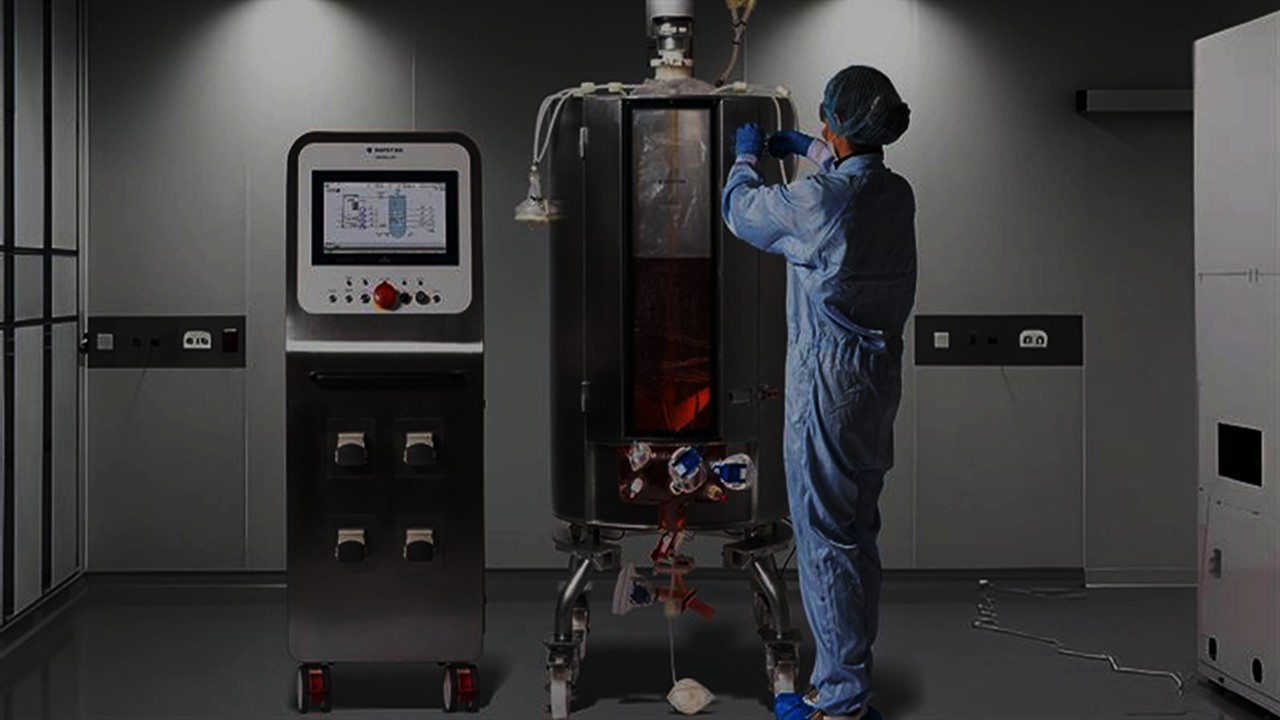
Biomanufacturing
The Plastic Revolution: How Single-Use Bioreactors Redefine Agility in Pharmaceutical Manufacturing
In the age of pandemics, geopolitical disruption, and just-in-time inventory, pharmaceutical resilience now hinges on manufacturing fluidity.
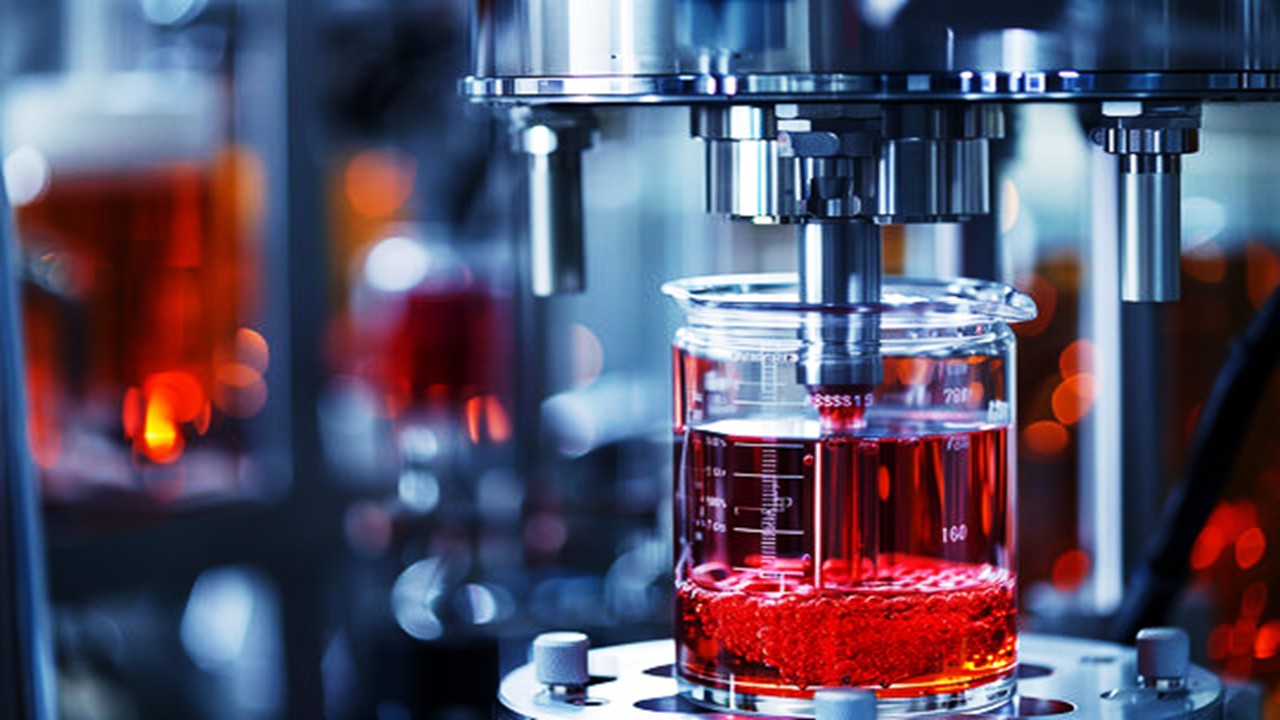

Read More Articles


Medicinal Chemistry & Pharmacology
March 12, 2026
Leaner Molecules: Structural Simplification Outperforming Brute-Force Potency Potency Chasing in Lead Optimization
Structural simplification is the science of turning chemically overbuilt leads into more efficient, drug-like molecules without surrendering their therapeutic logic.

Artificial Intelligence and Data Analytics
March 11, 2026
Digital Stewardship: Governing Access, Transparency, and Accountability in Clinical Data Warehouses
Clinical data warehouse governance determines how integrated health data can be responsibly accessed, shared, and reused to enable modern biomedical research.

Medicinal Chemistry & Pharmacology
March 10, 2026
Pocket Alchemy: Automated Structure-Based Design Rewrites Molecular Invention Logic
Structure-based de novo drug design is the science of teaching algorithms to imagine molecules under the hard constraints of protein geometry and real-world chemistry.

Immunology & Oncology
March 9, 2026
Oncology Rewired: Molecularly Precise Therapeutics Redefining the Architecture of Cancer Treatment
Emerging cancer therapies are redefining treatment by targeting the molecular circuitry, immune interactions, and metabolic vulnerabilities that allow tumors to survive and evolve.

Medicinal Chemistry & Pharmacology
March 6, 2026
Algorithmic Therapeutics: Artificial Intelligence Reshaping Biotech Drug Discovery and Product Development
Artificial intelligence is transforming biotech by making therapeutic discovery less like screening for luck and more like engineering across molecules, biologics, and delivery systems.

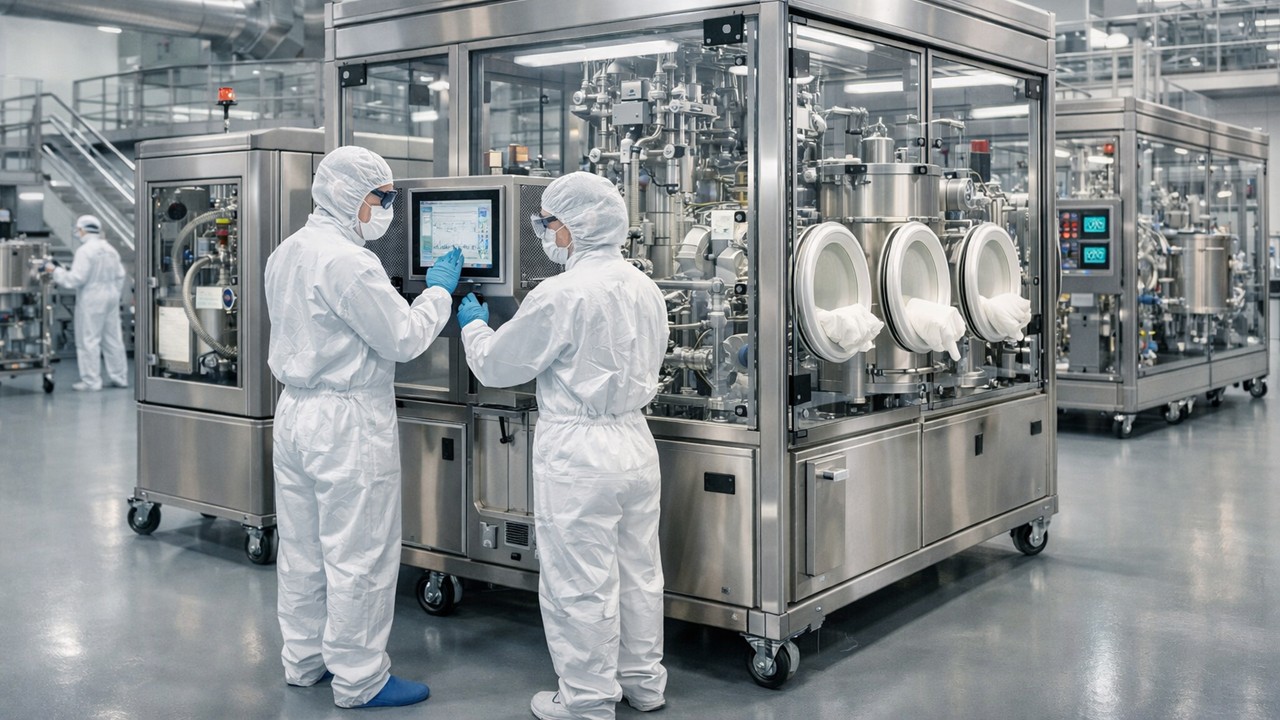
Chemistry, Manufacturing & Controls
March 4, 2026
Factory Logic: Modular Pharmaceutical Manufacturing Enabling Rapid Drug Production and Continuous Innovation
Modular pharmaceutical factories transform drug manufacturing into a continuously evolving technological system capable of integrating new therapies, processes, and production innovations without disrupting regulated operations.