
Seshu Tummala is the Vice President of Drug Substance Process Development and Manufacturing at Uniquity Bio.
At Uniquity Bio, Dr. Seshu Tummala, leads drug substance process development and manufacturing. With more than two decades of experience spanning biopharmaceutical manufacturing, technical operations, and process innovation, he has held senior leadership roles across leading global organizations, including CRISPR Therapeutics, Takeda Pharmaceutical Company, Shire, Lonza Group, and Sanofi Pasteur. His expertise lies at the interface of process development, manufacturing scale-up, and global regulatory alignment, supporting the advancement of complex biologics from early development through commercialization.
Dr. Tummala earned his Ph.D. in Biochemical Engineering from Northwestern University, where his research focused on advanced bioprocessing systems and translational manufacturing frameworks. He also holds a B.S. in Chemical Engineering from Johns Hopkins University. His academic foundation has underpinned a career defined by rigorous process engineering, enabling him to bridge fundamental biochemical principles with industrial-scale manufacturing solutions across diverse therapeutic modalities.
Throughout his career,Dr. Tummala has led high-impact CMC and technical operations initiatives across gene editing, RNA therapeutics, vaccines, and biologics platforms. At CRISPR Therapeutics, he directed CMC leadership and external manufacturing strategies for cutting-edge gene-editing programs, while at Lonza Group and Shire, he played key roles in bioprocess development, technology transfer, and large-scale manufacturing readiness. His tenure as Vice President of CMC and Technical Operations at Mana Therapeutics further highlights his capability to build and operationalize manufacturing infrastructures for next-generation therapeutics.
A recognized leader in drug substance development and manufacturing sciences, Dr. Tummala has consistently driven the integration of process innovation, quality systems, and scalable production strategies within fast-evolving biotech environments. His work reflects a deep commitment to advancing translational science, ensuring that complex therapeutic modalities can be reliably manufactured and delivered at global scale. Combining technical depth with strategic leadership, he continues to shape the future of drug substance process development and manufacturing across the biotechnology industry.
The Discussion
From Bioprocess Development to CMC Strategy Leadership: Bridging Science, Manufacturing, and Investment Relations
Engr. Dex Marco: It’s such a pleasure to have you here with us, Dr. Tummala. Seshu, your journey from upstream process development through leadership roles across Lonza Biologics, CRISPR Therapeutics, and now as Vice President at Uniquity Bio spans the full arc of drug substance development, how has this shaped your perspective on positioning CMC not just as an execution function, but as a core driver of investor confidence?
Dr. Seshu Tummala: Having been fortunate to contribute to numerous drug development programs across a wide range of modalities and organizations, I have developed a well‑rounded perspective on the key CMC attributes that drive the potential success of a new drug program. From a CMC standpoint, critical considerations include a clear understanding of the dosing strategy and corresponding drug product presentation; the robustness, scalability, and yields of both drug substance and drug product manufacturing processes; anticipated clinical and commercial demand; and, finally, the overall exit strategy for the program. Together, these factors inform the development of a phase‑appropriate CMC strategy that supports both technical execution and long‑term value creation.
Translating Innovation into Investability: Identifying When Science Becomes a Real Product Pathway
Dex: From an investor’s perspective, the challenge is distinguishing compelling science from developable products—what CMC signals, data packages, or development milestones most clearly indicate that an innovative modality can realistically translate into a manufacturable and scalable therapy?
Seshu: In my view, several key CMC milestones can serve as strong indicators of a successful program, depending on the quality of their execution. The first milestone is the generation of toxicology material using a manufacturing process that is readily scalable. The second is the successful production of GMP material for Phase 1 and Phase 2 clinical studies, ideally conducted at a reputable facility with relevant clinical manufacturing experience. In parallel, appropriate analytical methods and quality control assays should be identified and appropriately qualified or validated, supported by robust, phase‑appropriate data packages. Further de‑risking of the CMC program is achieved through establishing the intended commercial manufacturing scale for both drug substance and drug product and successfully executing GMP manufacturing at that scale. The final critical milestone is the successful completion of process characterization and/or process performance qualification, which together represent the final stages of CMC readiness prior to BLA submission.
Cost of Goods as a Strategic Signal: How COGS Shapes Investor Confidence and Valuation
Dex: COGS is increasingly scrutinized early in development—how much influence does cost of goods truly have on investor interest, and at what stage should companies begin integrating cost-conscious process design into their CMC strategy?
Seshu: Estimating COGS during toxicology material production can be informative but may also be premature, depending on the maturity of the manufacturing process. A more accurate assessment typically emerges once GMP manufacturing is underway. At that point, process yields and manufacturing costs can be benchmarked against comparable products within the same modality to determine whether further process optimization is necessary to achieve a competitive cost structure. For truly novel modalities, manufacturing costs should ultimately be evaluated in the context of potential commercial pricing strategies to confirm that continued development remains economically viable.
CDMO Limitations in Novel Modalities: Navigating Capacity, Capability, and Investor Perception
Dex: For emerging modalities where CDMO capabilities are still evolving, how do limitations in external manufacturing infrastructure impact investor sentiment, and what strategies can companies use to mitigate perceived execution risk?
Seshu: Novel modalities often require additional diligence in identifying CDMO partners capable of maximizing drug candidate value. A thoughtfully designed, risk‑based strategy that evaluates all critical components required for successful GMP manufacturing can be highly effective in demonstrating to investors that, despite the novelty of the modality, CMC risks have been systematically identified and appropriately mitigated. Moreover, early development of a readily scalable and robust manufacturing process—capable of delivering commercially viable yields and consistent product quality—can further strengthen investor confidence by reducing reliance on extensive CDMO‑led process development.
Drug Product Presentation as a Value Driver: What Actually Excites Investors
Dex: Beyond efficacy, what aspects of drug product presentation—whether formulation, delivery platform, stability profile, or patient usability—most strongly influence investor enthusiasm and confidence in a program?
Seshu: Drug product presentation can be a significant differentiator for a drug program relative to competing therapies. Clinical requirements aimed at optimizing safety and efficacy—including route of administration, concentration, stability, and dosing frequency—should be carefully evaluated to determine the most appropriate presentation. In addition, patient convenience and usability must be prioritized and validated through human factors studies. From an investor perspective, confidence depends on ensuring that the selected drug product presentation supports safe and effective dosing, promotes patient adherence, and ultimately contributes to meaningful improvements in patient outcomes.
Integrating CMC into the Investment Narrative: From Technical Detail to Strategic Storytelling
Dex: How should CMC leaders effectively translate complex process and manufacturing considerations into a compelling narrative that resonates with investors, without oversimplifying the underlying scientific and operational risks?
Seshu: An ideal deliverable for investor discussions is a well‑articulated CMC strategy that clearly defines the manufacturing plan across the entire drug development lifecycle. However, developing such a comprehensive strategy can be challenging in early‑stage programs—particularly for novel modalities—due to significant uncertainties and evolving risks. In these cases, a thorough risk assessment of key CMC deliverables, supported by clearly defined mitigation strategies, is essential. This approach helps demonstrate to investors that critical value drivers, risks, and decision points are well understood and actively managed, enabling effective execution of a successful CMC plan.
The Future of CMC as an Investment Lever: Elevating Process Development to a Strategic Differentiator
Dex: Looking ahead, how do you see CMC evolving from a supporting function into a primary driver of funding decisions and long-term competitive advantage in biotech?
Seshu: At its core, CMC exists to supply material for clinical trials and, ultimately, for commercial use to improve patient outcomes. The ability to manufacture a drug on demand and deliver it to patients at a low cost represents the fundamental objective of CMC. In my experience, however, CMC is often viewed as a necessity but not a primary driver to determine drug program success. For novel modalities, this mindset has led to significant setbacks for patients, as investments in cutting‑edge science—without sufficient appreciation of the underlying CMC challenges—have contributed to the decline or failure of many biotechnology companies in recent years. Capital lost on unrealistic opportunities, rather than allocated to more viable programs, ultimately reduces the number of therapeutic options available to patients. In my view, the ability of a CMC team to develop a robust manufacturing process with commercially viable yields and consistent product quality is critical to the success of emerging biotech companies and should carry greater weight in funding and investment decisions.
Engr. Dex Marco Tiu Guibelondo, B.Sc. Pharm, R.Ph.,B.Sc. CompE
Editor-in-Chief, PharmaFEATURES
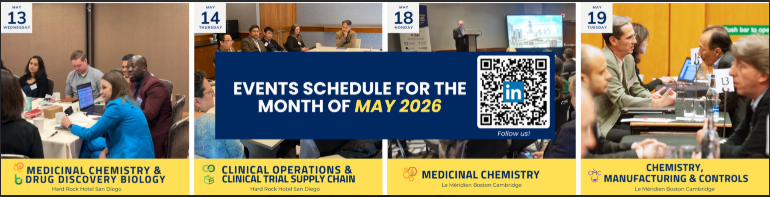
Join Proventa International’s Chemistry, Manufacturing and Controls (CMC) Strategy Meeting at Le Meridien Boston Cambridge, Massachusetts, USA on the 19th of May 2026 to learn more about “How CMC Considerations Are Increasingly Shaping Investor Confidence and Funding Decisions in Biotech” from Dr. Seshu Tummala.
Subscribe
to get our
LATEST NEWS
Related Posts

Interviews
Challenges in Technology Transfer for Oligonucleotide Therapeutics: Analytical Complexity, Process Robustness, and CMC Readiness with Rowshon Alam, Ph.D. — Vice President, Prime Medicine, Inc.
A strategic deep dive with Rowshon Alam, Ph.D. of Prime Medicine on analytical complexity, process robustness, and technology transfer readiness in next-generation oligonucleotide therapeutics.

Interviews
The Future of RNA CMC: Early Strategy, Smart Outsourcing, and Fully Integrated Development Architectures with Hagen Cramer, Ph.D., QurAlis CTO
Breaking CMC bottlenecks in RNA therapeutics is no longer a technical challenge, it is a strategic imperative under Hagen Cramer’s biotech leadership at QurAlis.

Interviews
Financing the Future of Health: Navigating Biotech Investment Risks and Rewards with David Crean, Cardiff Advisory LLC & 1004 Venture Partners
A deep dive into how strategic biotech investments balance scientific innovation with financial foresight in an era redefining the economics of health.

Read More Articles


Medicinal Chemistry & Pharmacology
April 14, 2026
Igor Nasonkin and Phythera Therapeutics: Moving Oncology Beyond Single Targets into Engineered Polypharmacologic Systems
Igor Nasonkin’s systems-driven approach at Phythera Therapeutics reframes oncology drug development from single-target inhibition to AI-enabled polypharmacologic network modulation using nature-derived molecular architectures.


Artificial Intelligence and Data Analytics
April 10, 2026
Inside Johnson & Johnson’s External Innovation Engine: Devin Swanson on Translating Integrated Discovery into Strategic Value
Devin Swanson’s leadership at Johnson & Johnson Innovative Medicines redefines external innovation as a tightly governed, AI-enabled translational system integrating multi-modal drug discovery, biomarker strategy, and capital-efficient execution.
Immunology & Oncology
April 9, 2026
From DMPK to Distributed Execution: Mehran F. Moghaddam’s Systems Strategy at OROX BioSciences, Inc.
A systems-level examination of how Mehran F. Moghaddam operationalizes DMPK, externalized R&D, and lipid-mediated therapeutics into a predictive, high-velocity biotech development architecture.


Artificial Intelligence and Data Analytics
March 31, 2026
From Data to Decision: Shicheng Guo’s Systems Approach to AI-Enabled Drug Development
A systems-level analysis of how Shicheng Guo is architecting AI-driven, human data–centric drug development at Arrowhead Pharmaceuticals.

Medicinal Chemistry & Pharmacology
March 30, 2026
Drugging mRNA with Small Molecules: David Weitz on Platform Strategy at Syrna Therapeutics
David Weitz of Syrna Therapeutics explores how small molecule modulation of mRNA, enabled by AI-driven discovery and platform-centric execution, is redefining the boundaries of druggable biology.