Legal, Chemical, and Platform Convergence: Architecting RNA-Targeted Systems Thinking
David Weitz’s career represents a convergence of legal, chemical, and biological disciplines into a unified systems-level approach to drug discovery. His training in chemistry and law from none other than UC Berkeley and MIT established a dual lens through which molecular design and intellectual property are treated as interdependent variables. This combination is particularly relevant in emerging modalities such as RNA-targeted therapeutics, where novelty and defensibility are tightly coupled. Rather than viewing IP as a downstream protection layer, it is integrated into the early design of molecular systems. This creates a development architecture where scientific innovation and strategic positioning evolve simultaneously.
His tenure at Takeda further operationalized this systems thinking within a large-scale research environment. Leading a 250+ person research site required aligning diverse functional groups, including structural biology, computational biology, and early target discovery. The emphasis was on creating a “biotech-like” agility within a global pharmaceutical framework, enabling rapid iteration without sacrificing governance. External alliances were not peripheral but central to the system, expanding capability while maintaining control. This approach transformed research from a siloed activity into a networked system of internal and external innovation.
The integration of legal strategy into scientific execution also influenced how partnerships were structured and managed. Agreements were designed to preserve flexibility while ensuring alignment with long-term strategic objectives. This required a deep understanding of both scientific trajectories and commercial landscapes. The result was a system capable of adapting to new opportunities without compromising coherence. This adaptability is critical in rapidly evolving fields such as RNA-targeted drug discovery.
At Syrna Therapeutics, this convergence is distilled into a focused platform strategy centered on small molecule modulation of mRNA. The company operates in stealth mode, reflecting a disciplined approach to disclosure and validation. The architecture being built is not merely a pipeline but a system designed to explore and exploit a new therapeutic space. This system integrates chemical design, structural biology, and computational modeling into a cohesive framework. The goal is to transform mRNA from a passive template into an active druggable target.
Small Molecule Modulation of mRNA as a Multi-Variable Therapeutic System
The concept of drugging mRNA with small molecules introduces a fundamentally different paradigm in therapeutic design. Unlike proteins, mRNA presents a dynamic and structurally complex target, with folding patterns and interactions that vary across cellular contexts. This variability introduces multiple layers of complexity, including target accessibility, binding specificity, and downstream functional effects. Weitz’s approach treats these variables as components of a unified system rather than isolated challenges. The objective is to achieve controlled modulation of mRNA function through precise chemical intervention.
Mechanistically, small molecules can influence mRNA stability, translation efficiency, and interaction with regulatory proteins. Each of these effects is mediated by structural features of the RNA, which must be accurately characterized and targeted. This requires integration of structural biology, computational modeling, and high-throughput screening. The system must account for both on-target and off-target interactions, as well as the temporal dynamics of mRNA expression. This level of complexity necessitates a shift from traditional screening paradigms to more sophisticated, model-driven approaches.
Biomarker strategy plays a critical role in translating these mechanistic insights into measurable outcomes. Expression profiles, translation rates, and downstream protein levels serve as indicators of system performance. These biomarkers are integrated into early-stage development to guide optimization and reduce uncertainty. By embedding biomarker feedback into the system, iterative design becomes more efficient and targeted. This reduces reliance on empirical trial-and-error approaches.
The potential for combination strategies further expands the system’s complexity. Small molecule modulation of mRNA can be combined with other therapeutic modalities, including RNA-based therapies and traditional small molecules. These combinations introduce non-linear interactions that must be carefully managed. Weitz’s framework addresses this through structured experimental design and predictive modeling. The goal is to maintain control over system behavior while exploring new therapeutic possibilities. This approach positions mRNA as a versatile and controllable therapeutic target.
Syrna Therapeutics and the Strategic Discipline of Platform-Centric Execution
At Syrna Therapeutics, Weitz has established a platform-centric approach that prioritizes depth over breadth. The company’s focus on mRNA-targeted small molecules reflects a strategic decision to concentrate resources on a high-potential but complex domain. This selectivity is reinforced by a governance model that emphasizes data integrity and decision discipline. Development efforts are structured around clearly defined milestones and quantitative criteria. This ensures that progress is both measurable and reproducible.
Operationally, the company integrates cross-functional teams from the earliest stages of development. Chemistry, biology, and computational groups are aligned within a unified framework, enabling rapid iteration and feedback. Program management serves as the central coordinating mechanism, ensuring consistency across workflows. This integration reduces fragmentation and enhances the efficiency of the development process. The result is a system capable of navigating complexity with precision.
Regulatory considerations are embedded into the development architecture from the outset. Given the novelty of targeting mRNA with small molecules, regulatory pathways are not fully established. Weitz’s approach anticipates these challenges by aligning development strategies with potential regulatory expectations. This includes early engagement with agencies and the development of robust data packages. The goal is to reduce uncertainty and facilitate smoother transitions into clinical development.
The company’s stealth mode operation reflects a broader philosophy of controlled disclosure. By limiting external communication until key validation milestones are achieved, Syrna maintains strategic flexibility. This approach also ensures that public narratives are aligned with validated data. The emphasis is on building a robust and defensible system before scaling. This disciplined execution model is critical for success in emerging therapeutic domain.
AI-Driven RNA Targeting and Predictive Discovery Architectures
The complexity of mRNA as a therapeutic target necessitates the integration of artificial intelligence into discovery and development workflows. AI is used to model RNA structures, predict binding sites, and optimize small molecule interactions. These capabilities enhance the resolution of system-level understanding, enabling more precise targeting. By incorporating AI into the design process, the system becomes more predictive and less reliant on empirical screening. This represents a significant shift in how drug discovery is conducted.
Predictive models are also used to anticipate biological responses and potential safety issues. By integrating data from multiple sources, including structural, biochemical, and cellular assays, these models provide a comprehensive view of system behavior. This enables earlier identification of potential risks and more informed decision-making. The integration of AI into development workflows enhances both speed and reliability. It allows the system to evolve dynamically in response to new data.
Regulatory considerations remain central to the adoption of AI-driven approaches. Models must be transparent, validated, and reproducible to gain regulatory acceptance. Weitz’s framework incorporates these requirements into the development architecture, ensuring that AI contributes to decision-making without compromising compliance. This alignment is critical for maintaining credibility with regulatory agencies. It also ensures that predictive tools are used responsibly and effectively.
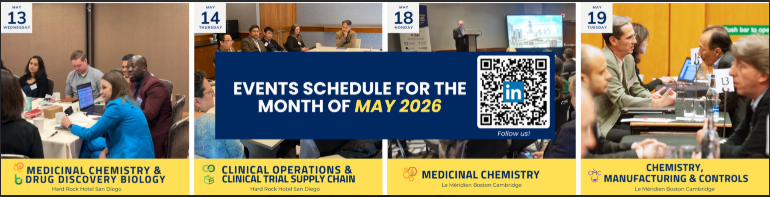
Within the context of the Proventa International Medicinal Chemistry & Drug Discovery Biology Strategy Meeting, the focus on drugging mRNA with small molecules highlights the intersection of computational and experimental approaches. The integration of AI into this domain is not optional but essential for managing complexity. This approach enables more efficient exploration of the therapeutic landscape. It also positions organizations to capitalize on emerging opportunities in RNA-targeted therapeutics.
Convergence of Molecular Design, Strategic Governance, and Future Therapeutic Systems
The synthesis of Weitz’s career and current work reveals a consistent emphasis on convergence across disciplines and system layers. His approach integrates chemical design, biological understanding, legal strategy, and operational execution into a unified framework. This convergence is essential for addressing the complexity of mRNA-targeted therapeutics. It enables the system to function as a cohesive whole rather than a collection of isolated components. This integration is a defining characteristic of effective leadership in modern biotech.
The alignment of multiple system layers—career-derived frameworks, platform-level design, company-level governance, and industry-level innovation—creates a robust development architecture. Each layer reinforces the others, enhancing overall system performance. This is particularly important in emerging fields where uncertainty is high and established pathways are limited. The ability to maintain alignment across these layers is critical for success. It distinguishes systems thinkers from domain specialists.
Looking forward, the integration of AI, advanced analytics, and novel therapeutic modalities will further increase system complexity. However, the underlying principles of governance, translational alignment, and cross-functional integration remain constant. The challenge lies in extending these principles to new domains without compromising system integrity. This requires continuous adaptation and refinement. The future of drug development will be defined by organizations that can successfully navigate this evolving landscape.
Weitz’s work at Syrna Therapeutics provides a model for how these elements can be integrated into a cohesive system. The emphasis on predictive control, disciplined execution, and strategic foresight positions the company at the forefront of RNA-targeted drug discovery. As the field evolves, these principles will become increasingly important. The trajectory suggests a shift toward more integrated and predictive development systems. This evolution will redefine the boundaries of what is possible in therapeutic innovation.
Learn more about David Weitz: https://www.linkedin.com/in/david-weitz-25ba/
Learn more about Syrna Therapeutics: https://www.syrnatx.com/
Engr. Dex Marco Tiu Guibelondo, B.Sc. Pharm, R.Ph.,B.Sc. CompE
Editor-in-Chief, PharmaFEATURES
Subscribe
to get our
LATEST NEWS
Related Posts

Medicinal Chemistry & Pharmacology
Igor Nasonkin and Phythera Therapeutics: Moving Oncology Beyond Single Targets into Engineered Polypharmacologic Systems
Igor Nasonkin’s systems-driven approach at Phythera Therapeutics reframes oncology drug development from single-target inhibition to AI-enabled polypharmacologic network modulation using nature-derived molecular architectures.

Medicinal Chemistry & Pharmacology
Leaner Molecules: Structural Simplification Outperforming Brute-Force Potency Potency Chasing in Lead Optimization
Structural simplification is the science of turning chemically overbuilt leads into more efficient, drug-like molecules without surrendering their therapeutic logic.

Medicinal Chemistry & Pharmacology
Pocket Alchemy: Automated Structure-Based Design Rewrites Molecular Invention Logic
Structure-based de novo drug design is the science of teaching algorithms to imagine molecules under the hard constraints of protein geometry and real-world chemistry.

Medicinal Chemistry & Pharmacology
Algorithmic Therapeutics: Artificial Intelligence Reshaping Biotech Drug Discovery and Product Development
Artificial intelligence is transforming biotech by making therapeutic discovery less like screening for luck and more like engineering across molecules, biologics, and delivery systems.
Read More Articles





Artificial Intelligence and Data Analytics
April 10, 2026
Inside Johnson & Johnson’s External Innovation Engine: Devin Swanson on Translating Integrated Discovery into Strategic Value
Devin Swanson’s leadership at Johnson & Johnson Innovative Medicines redefines external innovation as a tightly governed, AI-enabled translational system integrating multi-modal drug discovery, biomarker strategy, and capital-efficient execution.
Immunology & Oncology
April 9, 2026
From DMPK to Distributed Execution: Mehran F. Moghaddam’s Systems Strategy at OROX BioSciences, Inc.
A systems-level examination of how Mehran F. Moghaddam operationalizes DMPK, externalized R&D, and lipid-mediated therapeutics into a predictive, high-velocity biotech development architecture.
