A Partnership Built for End-to-End Therapeutic Acceleration
The long-term strategic partnership between Veeva Systems and BioMarin Pharmaceutical Inc. reflects a maturation in how biotechnology organizations conceptualize innovation. Rather than treating enterprise platforms as downstream operational utilities, the collaboration positions digital infrastructure as a co-equal enabler of scientific execution, regulatory rigor, and commercial scalability. This framing acknowledges that contemporary drug development is constrained less by discovery itself than by the orchestration of data, teams, and compliant processes that transform insight into approved therapy.
At a structural level, the agreement advances beyond software adoption into a shared operating model. BioMarin’s role in providing strategic input into Veeva’s products signals a bidirectional relationship in which a science-led biotechnology company actively shapes the systems that support its work. This feedback loop is particularly consequential in rare disease development, where adaptive clinical strategies, longitudinal patient evidence, and post-approval commitments demand platforms that evolve alongside scientific understanding rather than lag behind it.
The durability of the partnership introduces another often-overlooked advantage: institutional continuity. Stable, enterprise-wide digital foundations reduce fragmentation across development phases, preserve organizational knowledge, and limit the friction introduced by system changes mid-lifecycle. In an environment where regulatory delays and operational inefficiencies can materially affect patient access, continuity becomes a strategic asset rather than a background consideration.
This intent is articulated explicitly by leadership from both organizations. Alexander Hardy, President and Chief Executive Officer of BioMarin, characterized the agreement as “an important next step in our digital evolution,” highlighting the opportunity to combine BioMarin’s scientific capabilities with Veeva’s technological leadership to bring transformative medicines to patients more quickly worldwide. From the technology side, Peter Gassner, Chief Executive Officer of Veeva Systems, emphasized that the relationship has been anchored in shared values of product excellence, value realization, and customer success, expressing confidence in further supporting BioMarin as it advances new medicines and expands global patient reach. Together, these statements frame the partnership not as a transactional deployment, but as a strategic co-investment in digital foundations that directly shape how scientific innovation is operationalized at scale.
What Veeva Brings: A Unified Industry Cloud for Life Sciences
Veeva’s portfolio functions as connective tissue across the life sciences value chain, integrating clinical development, quality, regulatory, medical, and commercial operations into a unified digital environment. By replacing fragmented legacy systems with standardized yet configurable applications, Veeva enables organizations to manage the full lifecycle of a therapy within a coherent system of record. This unification is especially critical for biotechnology companies scaling complex portfolios without compromising compliance or data integrity.
A defining strength of the platform lies in how data and process intelligence are embedded directly into everyday workflows. Clinical documentation, regulatory submissions, safety reporting, and quality events are not siloed activities but interdependent components of a continuously auditable ecosystem. Layered atop this foundation are data and consulting services that translate operational signals into strategic insight, informing trial execution, portfolio prioritization, and launch readiness across regions.
Equally consequential is Veeva’s governance and operating philosophy as a public benefit corporation. This structure aligns long-term product investment with industry stewardship, emphasizing reliability, regulatory alignment, and customer success over short-term monetization. For a rare disease company whose therapies often establish new clinical and regulatory paradigms, partnering with a technology provider committed to durability and trust reinforces the strategic value of the digital backbone itself.
What BioMarin Contributes: Rare Disease Science at Industrial Scale
BioMarin contributes to the partnership a depth of scientific specialization in genetically defined diseases that few organizations can replicate. Its discovery and development engine is built around translating molecular and genetic insight into first- and best-in-class therapies, often in therapeutic areas with limited precedent. This scientific complexity places exceptional demands on digital systems, which must accommodate novel endpoints, small and geographically dispersed patient populations, and evolving regulatory expectations.
The company’s commercial footprint and advancing pipeline further serve as a real-world proving ground for enterprise innovation. Managing transitions from early clinical exploration to global commercialization requires tight coordination across manufacturing quality, regulatory compliance, medical engagement, and patient support programs. BioMarin’s operational reality therefore supplies high-fidelity use cases that help refine and stress-test Veeva’s platforms under the pressures of active development and market expansion.
Strategically, BioMarin also brings a patient-centered definition of speed and efficiency that reshapes how digital transformation is measured. In rare disease biotechnology, acceleration is not merely a competitive metric but a moral one, tied directly to shortening the time between diagnosis and access to effective treatment. By embedding this perspective into its digital evolution, BioMarin ensures that technology remains aligned with its ultimate purpose: delivering meaningful, durable therapies to patients who have historically had few options.
Press Release: Veeva & BioMarin Pharmaceutical, Inc.
Engr. Dex Marco Tiu Guibelondo, B.Sc. Pharm, R.Ph.,B.Sc. CompE
Editor-in-Chief, PharmaFEATURES
Subscribe
to get our
LATEST NEWS
Related Posts

Leadership, Trends & Investments
TwinGuard Advance: Engineering Sustainable Ultra-Low Temperature Protection for Modern Research
Next-generation ultra-low temperature freezers redefine sample protection by integrating energy efficiency, operational resilience, and intelligent monitoring into a unified scientific system.

Leadership, Trends & Investments
Where Strategy Meets Science: Inside Proventa International’s Life Science Roundtables
Proventa International’s expert curation of strategy meetings is quietly shaping the future of biotech and pharma, one roundtable at a time.

Leadership, Trends & Investments
Bridging Lab, Clinic, and Supply: The New Era of Pharma Operations
No More Silos: Integrating Science and Supply In a pharmaceutical landscape transformed by pandemics and personalized medicine, the walls between lab research, clinical trials, and logistics are coming down. A decade ago, teams handling Chemistry, Manufacturing, and Controls (CMC) focused on producing compounds after clinical success, while clinical operations (ClinOps) ran trials largely in isolation. […]
Leadership, Trends & Investments
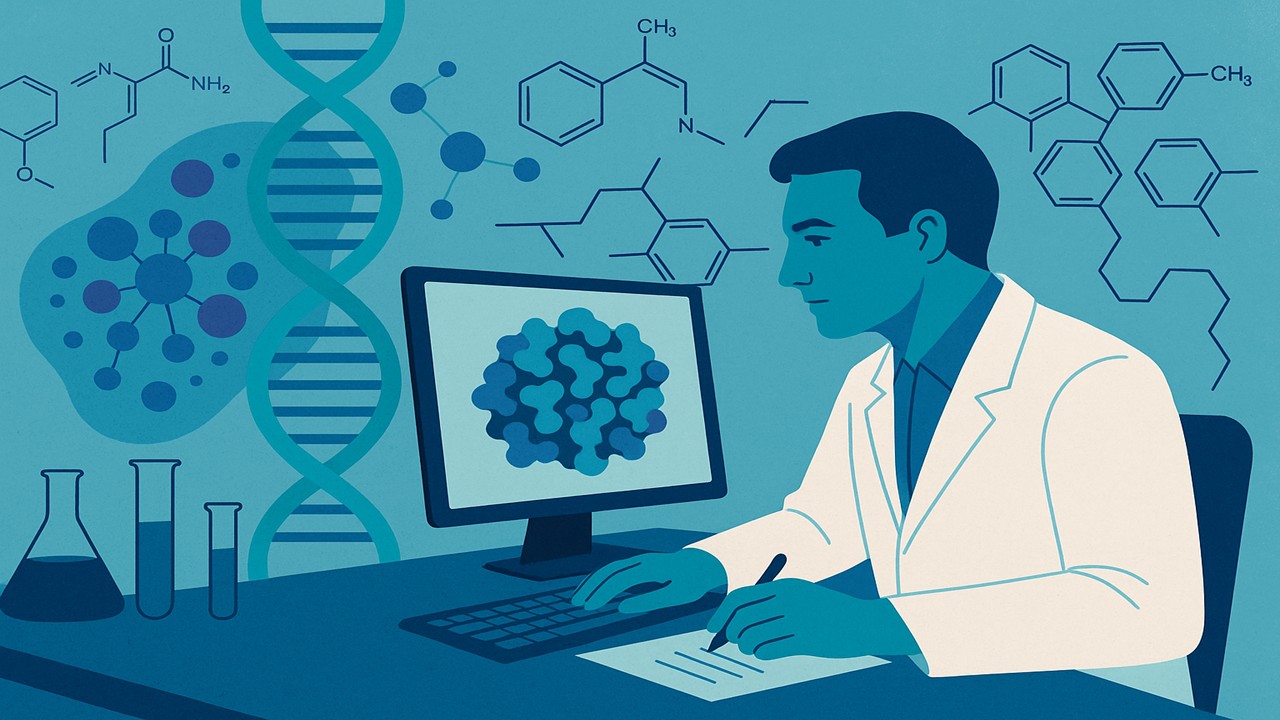
Chemists, Code, and Cures: The New Era of Drug Discovery
The Evolving Landscape of Drug Discovery In a gleaming pharmaceutical lab in 2025, a medicinal chemist might spend the morning reviewing molecular designs suggested by an artificial intelligence and the afternoon discussing genetic screen results with a biologist. The search for new medicines has evolved into a high-tech endeavor that would have seemed like science […]
Read More Articles


Medicinal Chemistry & Pharmacology
February 16, 2026
Spatial Collapse: Pharmacologic Degradation of PDEδ to Disrupt Oncogenic KRAS Membrane Localization
PDEδ degradation disrupts KRAS membrane localization to collapse oncogenic signaling through spatial pharmacology rather than direct enzymatic inhibition.

Medicinal Chemistry & Pharmacology
February 4, 2026
Neumedics’ Integrated Innovation Model: Dr. Mark Nelson on Translating Drug Discovery into API Synthesis
Dr. Mark Nelson of Neumedics outlines how integrating medicinal chemistry with scalable API synthesis from the earliest design stages defines the next evolution of pharmaceutical development.

Clinical Operations
February 3, 2026
Zentalis Pharmaceuticals’ Clinical Strategy Architecture: Dr. Stalder on Data Foresight and Oncology Execution
Dr. Joseph Stalder of Zentalis Pharmaceuticals examines how predictive data integration and disciplined program governance are redefining the future of late-stage oncology development.

Medicinal Chemistry & Pharmacology
February 2, 2026
Exelixis Clinical Bioanalysis Leadership, Translational DMPK Craft, and the Kirkovsky Playbook
Senior Director Dr. Leo Kirkovsky brings a rare cross-modality perspective—spanning physical organic chemistry, clinical assay leadership, and ADC bioanalysis—to show how ADME mastery becomes the decision engine that turns complex drug systems into scalable oncology development programs.

Regulatory Affairs
January 30, 2026
Policy Ignition: How Institutional Experiments Become Durable Global Evidence for Pharmaceutical Access
Global pharmaceutical access improves when IP, payment, and real-world evidence systems are engineered as interoperable feedback loops rather than isolated reforms.