Drug discovery once treated chemical space as a wilderness to be surveyed cautiously, molecule by molecule, with docking campaigns acting like disciplined expeditions through an impossibly large terrain. Automated structure-based de novo design changes the mood entirely. Instead of asking which compounds from an existing catalog might fit a target, it asks what kind of matter ought to exist inside a binding pocket, then builds toward that answer with computational intention. That shift has become more consequential as structural biology, predictive protein modeling, and make-on-demand chemistry have matured into a single technical ecosystem, with resources such as AlphaFold DB, commercial make-on-demand spaces, and experimental benchmarking efforts like CACHE giving the field a much broader operational base than it had even a few years ago.
What makes the present moment scientifically interesting is not simply that more molecules can be generated. It is that the generative act itself is becoming structurally literate. Modern de novo design systems increasingly treat the protein pocket not as a passive scoring surface but as a geometric and physicochemical partner that actively constrains molecular invention, shaping how fragments are extended, how substitutions are tolerated, and how candidate ligands are routed toward forms that medicinal chemistry can actually use.
When the Binding Pocket Becomes a Design Engine
The conceptual core of structure-based de novo design is deceptively simple: start from the receptor, not from the catalog. In practice, that means the binding site becomes an algorithmic object whose topology, electrostatics, steric tolerance, and hydrogen-bonding logic guide molecular construction. Classical virtual screening interrogates a prefabricated library and asks whether any member can survive the encounter with the pocket. De novo design reverses the logic by allowing the pocket to participate in the birth of the ligand itself.
That inversion matters because proteins do not merely bind molecules; they impose a grammar on them. Cavities have privileged vectors for growth, subpockets that reward polarity or punish it, and local packing environments that discriminate sharply between aromatic planarity, conformational flexibility, and three-dimensional bulk. A well-designed de novo system tries to internalize this grammar while remaining computationally lean enough to search iteratively. The real scientific challenge is therefore not only generation, but generation under biophysical pressure.
The arrival of richer structural input has intensified this pressure in a productive way. High-quality experimental structures from crystallography, NMR, and cryo-electron microscopy are now joined by predicted structures that broaden target coverage far beyond the classic canon of well-behaved proteins. This has made the receptor-side representation less of a bottleneck and has pushed the field toward methods that can exploit structural abundance without collapsing under scoring cost.
Yet the binding pocket is not a static mold, and that is where the science becomes more subtle. The best contemporary systems do not merely place atoms into empty space; they negotiate with conformational flexibility, side-chain accommodation, and the fact that binding is an emergent property of a complex energy landscape rather than a single frozen pose. For that reason, even the most automated workflows remain anchored to an old truth in molecular pharmacology: a ligand is not good because it is novel, but because its novelty survives contact with physical reality. From that point, the field naturally moves from principle to method, and method is where its most revealing distinctions appear.
Fragments, Evolution, and the Search for Chemical Intent
Fragment-based design remains the most intuitively medicinal-chemistry-friendly expression of de novo thinking because it mirrors how many chemists already reason about ligand optimization. A small anchor is placed in a productive region of the pocket, and the algorithm asks how that seed might be grown, linked, or merged into something with fuller complementarity. What sounds mechanical is actually highly constrained, because each extension must satisfy geometry, preserve a plausible binding pose, and avoid drifting into chemically incoherent territory. The elegance of fragment methods lies in their ability to decompose invention into local decisions without losing sight of the global architecture of binding.
The growing strategy is especially powerful because it exploits one of the most recurrent realities in structure-based design: a good ligand often begins as a partial answer. A fragment may satisfy one hydrogen-bonding motif or one hydrophobic cleft while leaving neighboring volume unaddressed. Growing methods attempt to convert that partial answer into a coherent molecular argument, whereas linking methods must preserve the poses of two separated fragments and merging methods must discover a shared scaffold logic across overlapping chemotypes. In all three cases, the algorithm is doing something more sophisticated than decoration; it is testing whether pocket occupancy can be transformed into affinity without destroying synthetic reasonableness.
Evolutionary algorithms introduce a different temperament. Rather than extending a single idea, they cultivate a population of ideas and subject that population to mutation, crossover, selection, and elitist preservation. This is not biological evolution in any literal sense, but the analogy is scientifically useful because it captures the tension between exploration and exploitation. A molecular population must diversify enough to escape local optima, yet converge enough to retain the structural motifs that make docking, shape complementarity, or pharmacophore satisfaction productive.
That tension is why evolutionary design can feel unexpectedly organic when it works well. The algorithm does not search chemical space evenly; it learns where productive pressure gradients seem to lie and pushes its progeny into those regions while preserving some randomness as insurance against premature convergence. In practice, this makes evolutionary methods especially good at multiobjective negotiation, where affinity, novelty, scaffold diversity, and elementary developability compete for influence. And once one begins to think of de novo design as a controlled negotiation among competing objectives, it becomes almost inevitable to confront the hardest negotiator of all: synthesis.
The Synthetic Accessibility Reckoning
Synthetic accessibility is the persistent reality principle of de novo design. A machine may generate a pocket-perfect ligand with exquisite geometric logic, but if the molecule requires a contrived route, unstable intermediates, or transformations that collapse under real laboratory conditions, the design has not failed at the end of the workflow; it was compromised from the beginning. This is why synthetic accessibility has moved from a post hoc complaint to a design constraint that increasingly shapes the architecture of the algorithms themselves.
Fragment-based methods have made some of the clearest progress here because they can tether generation to real chemistry at both the fragment-source and fragment-connection levels. When the starting fragments are drawn from purchasable collections or from chemotypes already grounded in known reactions, the search acquires a medicinally credible substrate. Reaction-rule frameworks go further by constraining bond formation to transformations with recognizable synthetic precedent, effectively embedding retrosynthetic discipline into the generative loop. Meanwhile, make-on-demand spaces built from validated reagents and reaction schemas have strengthened the idea that structural creativity and synthetic plausibility do not have to be adversaries.
Evolutionary and deep learning systems face a harder version of the same problem. Their power comes partly from freedom: they can mutate, interpolate, or sample in ways that are less tethered to reaction logic than classical fragment growth. But freedom in chemical generation often produces molecules that look pharmacologically seductive while remaining stubbornly impractical at the bench. Synthetic accessibility scores, filtering schemes, and retrosynthetic inspection help, yet they are imperfect surrogates for the tacit judgment of an experienced synthetic chemist who can sense route fragility long before a score formalizes it.
That gap is scientifically important because it exposes a broader issue in automation. Structure-based de novo design is often judged by what it can generate, but in drug discovery the more meaningful question is what it can hand off. A useful system must produce molecules that can survive the transition from digital object to flask, from docking pose to assay plate, from algorithmic novelty to medicinal-chemistry campaign. Once that translational threshold becomes the standard, the field’s next problem comes into focus: not just how to generate molecules, but how to prove that generation meant something.
Neural Generators and the Problem of Proof
Deep generative models have transformed the style of de novo design by changing the underlying representation of molecular possibility. Some systems speak in SMILES strings and learn chemistry as if it were a language, with token order standing in for connectivity and context. Others operate on molecular graphs, where atoms and bonds become nodes and edges in a representation that more closely matches chemical ontology. The most structurally ambitious systems work directly in three-dimensional space, attempting to generate coordinates, densities, or pocket-conditioned atomic placements so that conformation and composition emerge together rather than being stitched together after the fact.
This matters because receptor information can now be incorporated in qualitatively different ways. In some systems, the protein pocket conditions generation directly, functioning as a three-dimensional context that biases what the model considers chemically admissible. In others, docking-derived reward signals are used to steer search through backpropagation or tree-based optimization, allowing the model to drift toward molecules that score well under a chosen oracle. These are not merely implementation details; they reflect competing philosophies about whether the receptor should instruct generation from the outset or judge it after the fact.
The excitement around these models is justified, but so is the skepticism. Neural systems are extraordinarily good at producing chemically fluent output, yet fluency is not the same thing as mechanistic truth. A generated ligand may appear coherent, satisfy cheminformatic validity rules, and even adopt an attractive docked pose while still exploiting weaknesses in the scoring function rather than genuine protein–ligand complementarity. For that reason, the best validation studies probe whether protein information actually shaped the output, whether generated poses remain stable after minimization or simulation, and whether the model can recover or meaningfully generalize beyond known binding motifs rather than merely restyle them.
That demand for proof is gradually pushing the field toward more disciplined benchmarking and more experimental accountability. Community efforts such as CACHE are valuable not because they celebrate any one modeling ideology, but because they force methods into a common arena where computational elegance meets assay reality under standardized conditions. In that setting, the central scientific question sharpens beautifully: can an automated system use structural information to invent molecules that are not only novel and plausible, but chemically reachable and biologically real?
Automated structure-based de novo drug design is therefore not simply a faster version of old computer-aided chemistry. It is an attempt to formalize, inside algorithms, the difficult conversation that has always existed between structural biology, physical chemistry, and synthesis. The field is most impressive not when it claims to replace medicinal chemistry, but when it begins to speak medicinal chemistry’s language with enough rigor to become a serious creative partner.
Study DOI: 10.1021/acs.jcim.4c00247
Engr. Dex Marco Tiu Guibelondo, B.Sc. Pharm, R.Ph.,B.Sc. CompE
Editor-in-Chief, PharmaFEATURES

Subscribe
to get our
LATEST NEWS
Related Posts

Medicinal Chemistry & Pharmacology
Leaner Molecules: Structural Simplification Outperforming Brute-Force Potency Potency Chasing in Lead Optimization
Structural simplification is the science of turning chemically overbuilt leads into more efficient, drug-like molecules without surrendering their therapeutic logic.
Medicinal Chemistry & Pharmacology
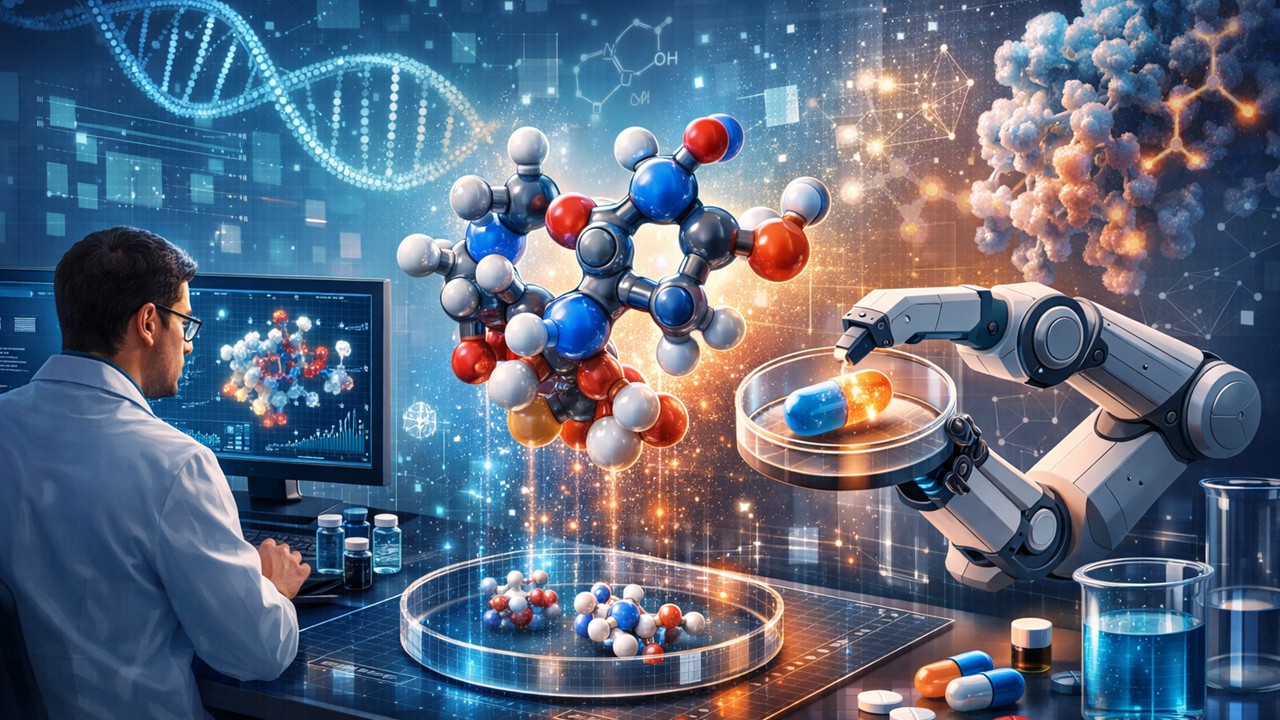
Algorithmic Therapeutics: Artificial Intelligence Reshaping Biotech Drug Discovery and Product Development
Artificial intelligence is transforming biotech by making therapeutic discovery less like screening for luck and more like engineering across molecules, biologics, and delivery systems.
Medicinal Chemistry & Pharmacology
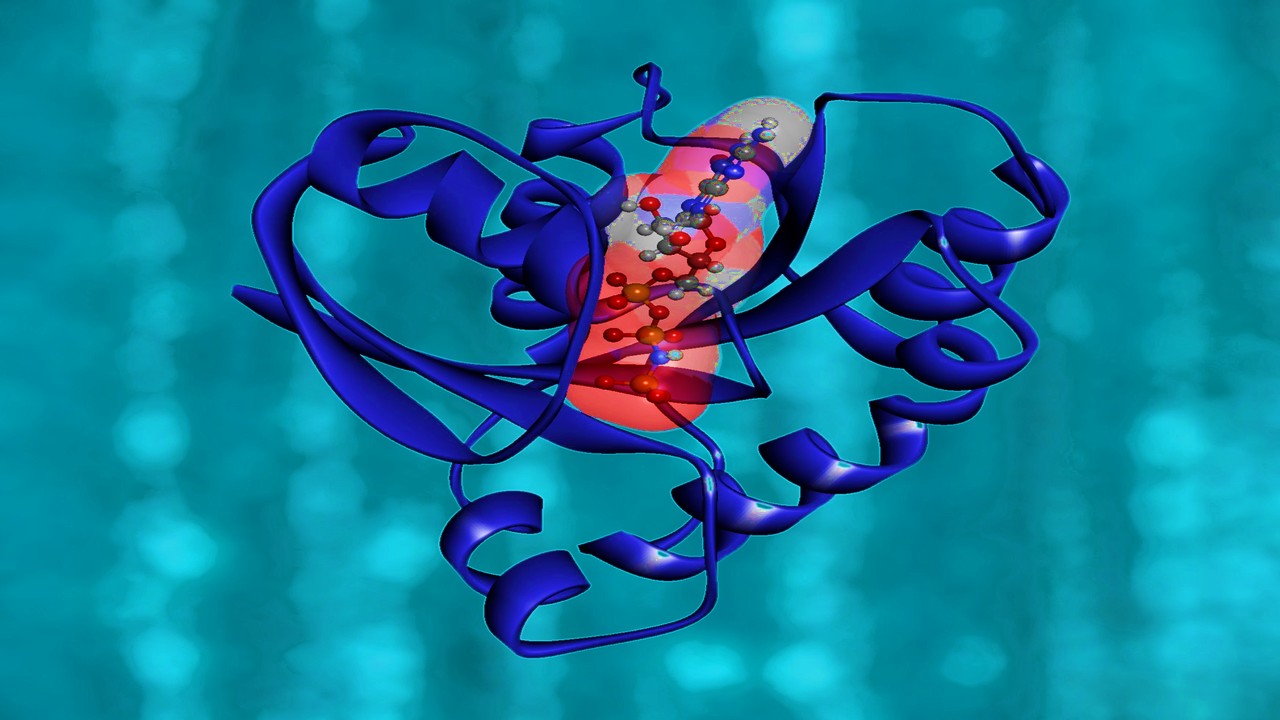
Spatial Collapse: Pharmacologic Degradation of PDEδ to Disrupt Oncogenic KRAS Membrane Localization
PDEδ degradation disrupts KRAS membrane localization to collapse oncogenic signaling through spatial pharmacology rather than direct enzymatic inhibition.

Medicinal Chemistry & Pharmacology
Neumedics’ Integrated Innovation Model: Dr. Mark Nelson on Translating Drug Discovery into API Synthesis
Dr. Mark Nelson of Neumedics outlines how integrating medicinal chemistry with scalable API synthesis from the earliest design stages defines the next evolution of pharmaceutical development.
Read More Articles


Artificial Intelligence and Data Analytics
March 11, 2026
Digital Stewardship: Governing Access, Transparency, and Accountability in Clinical Data Warehouses
Clinical data warehouse governance determines how integrated health data can be responsibly accessed, shared, and reused to enable modern biomedical research.
Immunology & Oncology
March 9, 2026
Oncology Rewired: Molecularly Precise Therapeutics Redefining the Architecture of Cancer Treatment
Emerging cancer therapies are redefining treatment by targeting the molecular circuitry, immune interactions, and metabolic vulnerabilities that allow tumors to survive and evolve.

Chemistry, Manufacturing & Controls
March 4, 2026
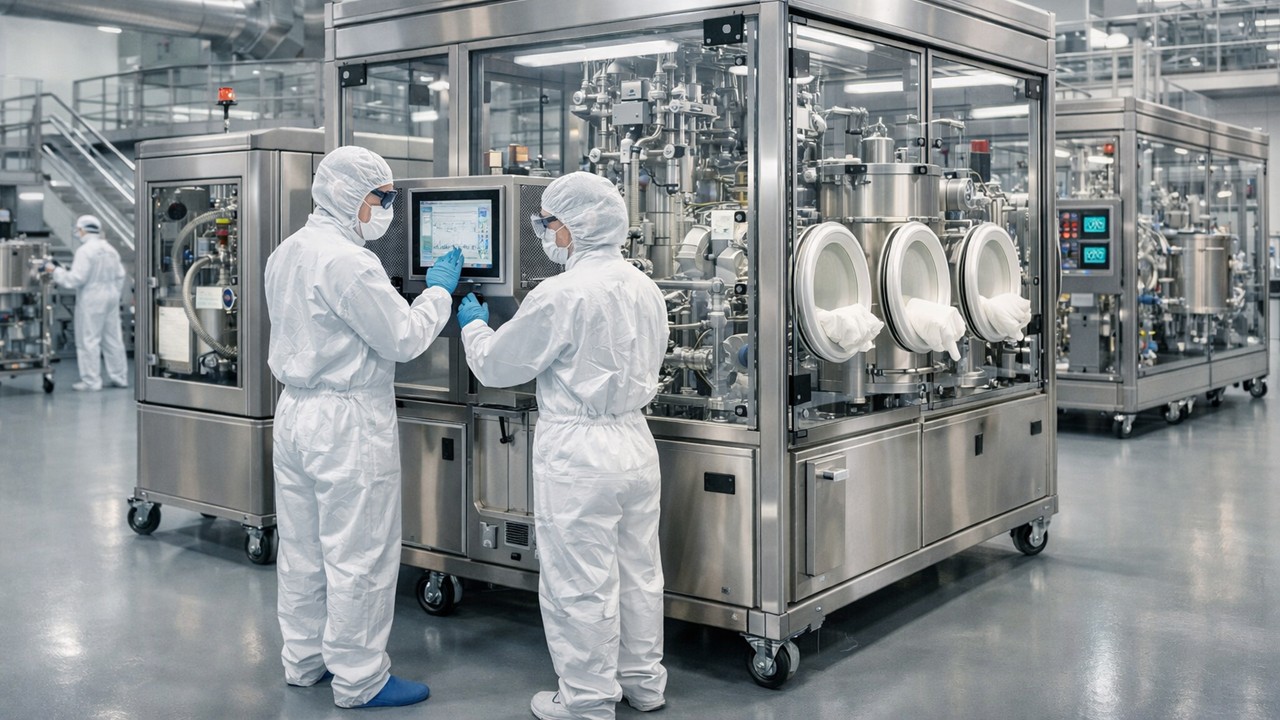
Factory Logic: Modular Pharmaceutical Manufacturing Enabling Rapid Drug Production and Continuous Innovation
Modular pharmaceutical factories transform drug manufacturing into a continuously evolving technological system capable of integrating new therapies, processes, and production innovations without disrupting regulated operations.

Artificial Intelligence and Data Analytics
March 3, 2026
Living Vigilance: Why Clinical AI Performance Monitoring Must Become Part of Routine Care
Clinical AI monitoring is the post-deployment discipline that turns algorithmic accuracy into sustained clinical trust.

Artificial Intelligence and Data Analytics
March 2, 2026
Data Spine: Choosing the Clinical Architecture That Lets AI Learn Without Losing Trust
Clinical AI infrastructure is the hidden architecture that decides whether medical data can become reliable intelligence rather than expensive digital noise.
