About the Interviewee
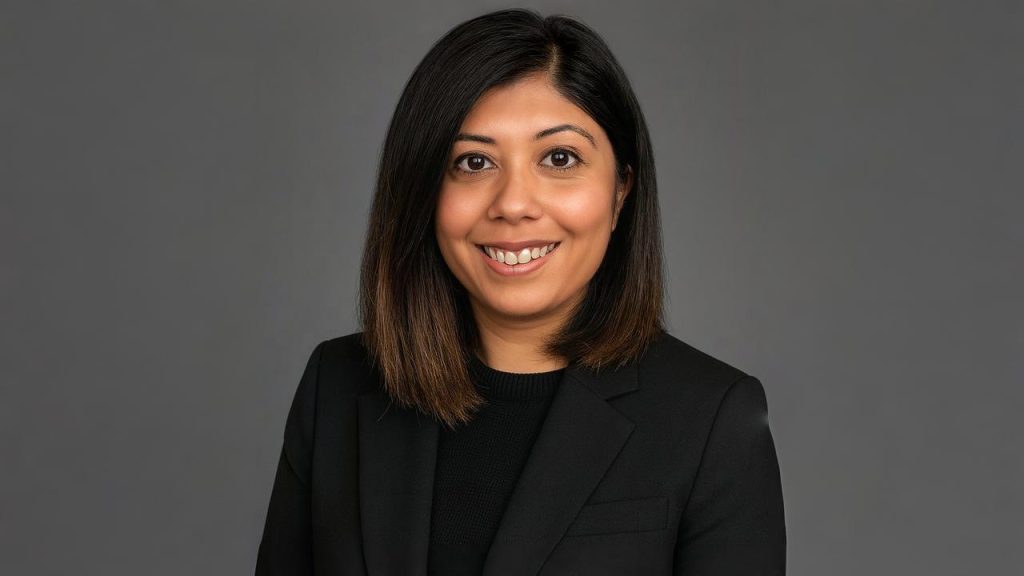
Saima Khakwani is a Scientific Advisor at Clario.
Saima Khakwani, MSc, MPH is a patient-centred outcomes scientist whose career spans clinical care, digital health innovation, and global evidence generation. She has built a distinct reputation for translating patient experience into high-quality, regulator-ready Clinical Outcome Assessments (COAs) and patient-reported outcomes (PROs). With expertise grounded in measurement science, psychometrics, and trial usability, she bridges the gap between what patients report and what regulators require—ensuring that digital data capture is both scientifically rigorous and operationally feasible.
At Clario, Ms. Khakwani leads scientific strategy for eCOA across Phase I–IV development, advising global sponsors in oncology, dermatology, neuroscience, immunology, and vaccines. Her work spans endpoint justification, instrument selection, migration to digital platforms, and cultural adaptation, ensuring that each COA is meaningful, interpretable, and aligned with regulatory and HTA expectations. She has provided scientific input on more than seventy RFPs and protocol designs, supported over £25M in awarded projects, and contributed thought leadership to ISPOR, DIA, SABCS, and C-Path collaborations advancing digital COA methodology.
Her operational depth is matched by hands-on experience implementing digital systems. Before joining Clario, she supported global trials at ICON as a Senior Clinical Systems Specialist, ensuring that eCOA and IRT deployments aligned with clinical intent, usability standards, and risk-based monitoring needs. At Parexel, she designed IRT frameworks that strengthened randomisation integrity and site workflow efficiency. Earlier, as a Product Owner and Business Analyst in UK telehealth, she led the development of digital consultation platforms integrated with wearable devices and medical technologies—experience that informs her seamless approach to digital trial design.
Ms. Khakwani’s patient-first orientation is grounded in a strong academic foundation. She holds an MPH from Imperial College London, where she trained in epidemiology, health systems, and eHealth, and participated in global-health engagements with WHO, GAVI, and UNHCR. She also completed graduate study in Islamic Studies and Humanities, focusing on social determinants in Muslim societies, and began her career as a Registered Nurse with the Aga Khan University Hospital—experience that anchors her scientific work in real patient context and frontline clinical realities.
Across science, operations, and digital health, Ms. Khakwani brings a multidisciplinary lens to modern evidence generation. Her strengths include COA strategy, PRO methodology, digital migration, cultural adaptation, rater training, and cross-functional trial enablement. Her through-line is clear: elevate the patient voice with methodological integrity, bring clinical trials into the digital age through eCOA, and ensure that what patients report becomes measurable insight that strengthens decision-making across global drug development.
The Discussion
Clario: Where Measurement Science Meets Patient Reality
Dex Marco: It’s such a pleasure to have you here with us, Ms. Khakwani. So, Saima, with your deep experience advancing patient-centred outcomes across global trials, you sit at a critical intersection where measurement science, patient experience, and regulatory expectations meet. In your role as Clario’s Scientific Advisor for eCOA Science, how has your methodological background shaped the way you design defendable, patient-relevant COA strategies, and what initially drew you to the scientific and operational challenges of digital outcome measurement?
Saima: Thank you for having me, Dex. I started in outcomes research, fascinated by how seemingly small choices in a diary or questionnaire can change the quality of evidence a trial generates. At Clario, I found the right balance of science, technology, and operations to turn that insight into practice. Over the past six years, I’ve supported trials across Oncology, Respiratory, Immunology, Dermatology and Vaccines. My focus is pragmatic: design eCOA that patients can and will complete, and that sponsors can defend to regulators. That means early scientific input, instrument selection with content validity in mind, careful diary logic, and sensible backup strategies. I also contribute to internal research and publications because advancing eCOA methods benefits the whole ecosystem, not just a single study.
Defining Digital Outcomes in Modern Clinical Trials
Dex: Digital endpoints now sit at the center of patient-centred evidence generation, shaping how global trials capture, interpret, and defend clinical outcomes. From your perspective at Clario, can you briefly explain what eCOA is and how it functions within global clinical studies?
Saima: Absolutely. eCOA, or electronic Clinical Outcome Assessment, is the digital capture of clinical outcomes, whether reported by patients, clinicians, caregivers, or through task-based performance. This can be completed on either a smartphone, tablet, BYOD (Bring Your Own Device), provisioned handheld, web-based, or a combination of devices. The technology combines software (the eCOA application itself) with hardware (the device used for data entry), enabling secure, user-friendly, real-time capture of trial outcomes.
Why eCOA Is Redefining Modern Evidence Generation
Dex: As digital data capture becomes central to how clinical trials reduce burden and strengthen evidence quality, eCOA has emerged as a pivotal driver of trial efficiency and patient-centric design. From your vantage point at Clario, why is eCOA transformative in today’s clinical trials, and what makes its impact so distinct across modern study operations?
Saima: Why is eCOA transformative? Because it brings multiple advantages: built-in logic and workflows that help reduce data entry errors, app reminders that support patient compliance, immediate data availability for faster decision-making, improves patient safety, integration with devices, e.g., BGM/CGM, PEF devices, wearables, etc and the ability to integrate seamlessly with decentralised and hybrid trial designs. Another reason why eCOA is transformative, is because the higher quality of the data means a smaller sample size is necessary to get to the same result. This means lower recruitment requirement and lower patient burden. At Clario, our eCOA platform empowers sponsors and CROs to deliver trials that are more patient-centric, efficient, and regulator-ready in today’s digital-first environment.
Strategic Considerations for Selecting eCOA in Biotech Trials
Dex: Biotechs navigate increasingly complex digital and decentralized trial environments, choosing the right eCOA approach has become central to data quality, patient experience, and operational success. From your perspective at Clario, what should biotechs consider when selecting an eCOA solution and planning their clinical trial strategy?
Saima: Start with strong endpoints: Biotechs often ask how to choose the right endpoints. It’s important to define meaningful and measurable ones early, even in Phase 1, because they impact both clinical success and regulatory approval.
Choose a scientifically strong eCOA partner: Your eCOA vendor should help with endpoint strategy and converting paper instruments to digital formats using best practices.
Ensure reliable data capture: The platform must collect data accurately and consistently, even offline. This is crucial for global trials or areas with poor internet access.
Focus on the patient experience: The eCOA system should be easy to use and reduce patient burden. Features like reminders, simple interfaces, and gamification can boost compliance.
Streamline operations: A good eCOA partner should handle everything, from licenses and devices to global support, internally. This reduces complexity and avoids delays.
And look for innovation: At Clario, we validate new accessibility features such as zoom in/zoom out, dark mode so that data entry is easier for the patient and inclusivity is higher across populations.
The Strategic Role of eCOA Science in Trial Quality
Dex: Clinical trials have become increasingly reliant on digital outcome measurement to meet scientific and regulatory expectations, the distinction between technology and methodology has become more important than ever. From your perspective at Clario, why is it essential for an eCOA partner to have a dedicated eCOA Science team?
Saima: eCOA is not just about technology, it is about science. An eCOA science team ensures that the instruments that are chosen for a study, are clinically meaningful and fit-for-purpose, and that the migration from paper to electronic preserves validity. With this layer of expertise, we build tools that work both technically and scientifically.
Our science team builds that bridge. We validate usability through methods like cognitive debriefing, screen review, and pilot testing so that patients can understand and complete their tasks correctly. In parallel, we also advise sponsors on their endpoint strategy and protocol design. We help ensure that the data generated for the study is of high quality, reliable, and regulatory-ready.
The science team makes sure that the eCOA is not just capturing data, it captures the right data, in the right way and for the right purpose.
Envisioning the Future of eCOA for Next-Generation Biotech Trials
Dex: Digital transformation is accelerating across clinical development and biotechs look for ways to run faster, more reliable, and more patient-friendly studies, eCOA is becoming a cornerstone of how modern evidence is generated. From your perspective as an eCOA scientist at Clario, what is your vision for the future of eCOA, and how will it help biotechs design and deliver better trials?
Saima: If I had to sum it up, my vision is for clinical trials to transition to eCOA and bring them into the digital age, where reliability, quality and efficiency are the norm. With eCOA, we are not just collecting data, we are making it easier for all our stakeholders involved. Automation means fewer errors and less paperwork for the site staff, so that they can focus on what really matter: Patients.
For biotechs where speed and flexibility are of immense importance, eCOA helps get studies up and running fast and keeps things running smoothly. It is patient-friendly, regulator-ready and makes the whole process a lot more seamless. In short, my vision is for eCOA to be our go-to solution so that we can make our clinical trials more efficient, more reliable and a lot less paper heavy.
Engr. Dex Marco Tiu Guibelondo, B.Sc. Pharm, R.Ph., B.Sc. CompE
Editor-in-Chief, PharmaFEATURES
Elevate your clinical trials with Clario’s industry-leading digital endpoint solutions that strengthen efficacy, safety, and patient-quality-of-life insights across all study phases. Learn more here: clario.com.

Subscribe
to get our
LATEST NEWS
Related Posts

Interviews
Financing the Future of Health: Navigating Biotech Investment Risks and Rewards with David Crean, Cardiff Advisory LLC & 1004 Venture Partners
A deep dive into how strategic biotech investments balance scientific innovation with financial foresight in an era redefining the economics of health.

Interviews
The Economics of Innovation: Optimizing Clinical Trial Investments with Robert Gabriel, Ashur Capital
A thought-provoking discussion on aligning scientific rigor, venture strategy, and financial intelligence to maximize R&D efficiency and accelerate the path from discovery to market.

Interviews
Clinical Research 4.0: Bridging Global Standards with Local Realities and Expanding Patient Access with Rania Alshami, PDC CRO
Rania Alshami leads PDC-CRO in advancing clinical research across the Middle East and Africa by integrating global scientific standards with regional realities to accelerate patient access to innovative therapies.

Read More Articles


Medicinal Chemistry & Pharmacology
February 16, 2026
Spatial Collapse: Pharmacologic Degradation of PDEδ to Disrupt Oncogenic KRAS Membrane Localization
PDEδ degradation disrupts KRAS membrane localization to collapse oncogenic signaling through spatial pharmacology rather than direct enzymatic inhibition.

Medicinal Chemistry & Pharmacology
February 4, 2026
Neumedics’ Integrated Innovation Model: Dr. Mark Nelson on Translating Drug Discovery into API Synthesis
Dr. Mark Nelson of Neumedics outlines how integrating medicinal chemistry with scalable API synthesis from the earliest design stages defines the next evolution of pharmaceutical development.

Clinical Operations
February 3, 2026
Zentalis Pharmaceuticals’ Clinical Strategy Architecture: Dr. Stalder on Data Foresight and Oncology Execution
Dr. Joseph Stalder of Zentalis Pharmaceuticals examines how predictive data integration and disciplined program governance are redefining the future of late-stage oncology development.

Medicinal Chemistry & Pharmacology
February 2, 2026
Exelixis Clinical Bioanalysis Leadership, Translational DMPK Craft, and the Kirkovsky Playbook
Senior Director Dr. Leo Kirkovsky brings a rare cross-modality perspective—spanning physical organic chemistry, clinical assay leadership, and ADC bioanalysis—to show how ADME mastery becomes the decision engine that turns complex drug systems into scalable oncology development programs.

Regulatory Affairs
January 30, 2026
Policy Ignition: How Institutional Experiments Become Durable Global Evidence for Pharmaceutical Access
Global pharmaceutical access improves when IP, payment, and real-world evidence systems are engineered as interoperable feedback loops rather than isolated reforms.