Membrane Biophysics to CMC Governance: Engineering Translational Control in Nucleic Acid Therapeutics
Sean Sullivan’s career reflects a sustained convergence toward systems-level control of pharmaceutical development, grounded in membrane biophysics and enzymology. His academic training in biochemistry established a mechanistic orientation toward lipid behavior, macromolecular interactions, and biological transport systems. This foundation proved directly translatable to nucleic acid therapeutics, where delivery systems dictate both efficacy and safety. Early work on liposomal targeting and biodistribution created a framework for understanding how formulation parameters govern biological outcomes. Rather than treating delivery as a formulation endpoint, it became a central design variable within a larger system.
Across roles in gene therapy, lipid systems, and RNA-based platforms, Sullivan consistently operated at the interface of biology, chemistry, and process engineering. His tenure at organizations such as Vestar, Ribozyme Pharmaceuticals, and Valentis required integrating discovery biology with scalable manufacturing constraints. This integration forced a departure from linear development models toward multi-variable systems thinking. Each program required simultaneous control of vector design, payload stability, and delivery kinetics. The result was an early adoption of translational alignment as a governing principle rather than a downstream correction.
At Vical and subsequent leadership roles, this framework evolved into formalized governance structures linking preclinical research to CMC execution. Development programs were not advanced based on isolated performance metrics but on system-level readiness across formulation, manufacturing, and regulatory domains. This required establishing decision gates that incorporated stability data, process reproducibility, and analytical validation. The emphasis shifted toward front-loading data to reduce downstream uncertainty. This architecture enabled more predictable transitions from research to clinical development.
This progression culminates in a distinct operational philosophy: nucleic acid therapeutics as integrated systems requiring synchronized control across biological and industrial parameters. Sullivan’s trajectory demonstrates that effective development in this domain depends on the co-evolution of science and process. The system must be designed to anticipate variability rather than react to it. This requires embedding control mechanisms at every stage of development. The result is a development architecture defined by predictability, scalability, and regulatory alignment.
RNA, DNA, and Delivery Systems as Multi-Variable Development Architectures
At Arcturus Therapeutics, Sullivan’s work centers on nucleic acid platforms encompassing mRNA, self-amplifying RNA, and plasmid DNA systems. These modalities introduce a level of complexity that exceeds traditional small molecule development due to their dependence on delivery vehicles and intracellular processing. The platform must simultaneously optimize sequence design, structural stability, and delivery efficiency. Lipid nanoparticle systems act as both carriers and modulators of biological response, introducing additional variables into the system. This creates a tightly coupled network of parameters that must be co-optimized.
The mechanism of action for these therapeutics is inherently multi-layered, involving cellular uptake, endosomal escape, translation, and immune activation. Each step introduces variability that can propagate through the system, affecting both efficacy and safety. Sullivan’s approach treats these processes as interconnected nodes within a controlled architecture. Rather than optimizing each component independently, the system is tuned to achieve balanced performance across all stages. This requires integrating biochemical design with delivery engineering and immunological profiling.
Biomarker strategy becomes central in this context, serving as the primary mechanism for translating system behavior into measurable outputs. Immune response markers, expression kinetics, and biodistribution profiles are used to define system performance in both preclinical and clinical settings. These biomarkers are not retrospective indicators but active components of the development system, informing iterative design decisions. Their integration into early-stage development enables more precise control of downstream outcomes. This reduces reliance on empirical escalation and enhances predictability.
Combination complexity further amplifies these challenges, particularly in applications involving co-delivery or sequential modulation of biological pathways. The interaction between multiple nucleic acid constructs or between payload and delivery system introduces non-linear effects. Sullivan’s framework addresses this through structured experimental design and predictive modeling. By treating combination strategies as system-level configurations rather than additive interventions, the architecture maintains coherence. This enables the development of complex therapeutic strategies without compromising control.
Arcturus Therapeutics and the Discipline of CMC-Integrated Execution
The operational model at Arcturus Therapeutics reflects a high degree of integration between scientific innovation and manufacturing discipline. Sullivan’s leadership in technology innovation emphasizes the alignment of discovery, process development, and regulatory strategy within a unified framework. This integration is essential for nucleic acid therapeutics, where manufacturing constraints directly influence clinical feasibility. The organization prioritizes early establishment of cGMP-compatible processes to reduce friction during scale-up. This approach embeds manufacturability as a core design parameter rather than a downstream consideration.
Process development is tightly coupled with regulatory engagement, particularly in addressing CMC inquiries from global agencies. Sullivan’s experience in navigating US, European, and Japanese regulatory frameworks informs a proactive approach to compliance. Data packages are constructed with regulatory expectations in mind, ensuring that each component of the system is defensible and reproducible. This reduces the risk of delays and rework during later stages of development. The result is a streamlined pathway from IND to clinical execution.
The identification and management of CMOs introduce another layer of system complexity, requiring alignment between internal standards and external capabilities. Sullivan’s framework emphasizes rigorous selection criteria and continuous oversight to ensure consistency across manufacturing partners. Critical raw materials, particularly lipid and polymer components, are treated as strategic variables within the system. Their sourcing, characterization, and quality control are integrated into the broader development architecture. This ensures that variability is minimized and controlled at the source.
Program management functions as the central coordinating mechanism within this architecture, enforcing alignment across scientific and operational domains. Decision-making is structured around clearly defined milestones and quantitative thresholds. This governance model enables rapid iteration while maintaining control over system integrity. Deviations are identified and addressed early, preventing downstream escalation. The organization thus operates as a disciplined system designed to deliver consistent outcomes in a complex and evolving landscape.
Predictive Manufacturing Intelligence and AI-Enabled Development Control
The increasing complexity of nucleic acid therapeutics necessitates the integration of advanced analytics and artificial intelligence into development systems. AI is applied not as an isolated tool but as an embedded component of process and product optimization. In manufacturing, machine learning models are used to predict process variability, optimize formulation parameters, and enhance yield consistency. These capabilities enable more precise control over production systems, reducing batch-to-batch variability. The result is a more reliable and scalable manufacturing architecture.
In preclinical and clinical development, predictive models are used to link formulation characteristics with biological outcomes. This includes modeling expression kinetics, immune responses, and biodistribution patterns based on input parameters. These models enhance the ability to forecast clinical performance from early-stage data. The integration of such predictive capabilities into development workflows reduces reliance on sequential experimentation. Instead, the system evolves through informed iteration guided by data-driven insights.
Regulatory considerations play a critical role in the adoption of AI-driven approaches, requiring transparency and validation of models. Sullivan’s framework incorporates these requirements into the development architecture, ensuring that predictive tools are both scientifically robust and regulatory-compliant. This alignment is essential for maintaining credibility with regulatory agencies. It also ensures that AI contributes to decision-making without introducing unvalidated risk. The governance model thus extends to digital components of the system.
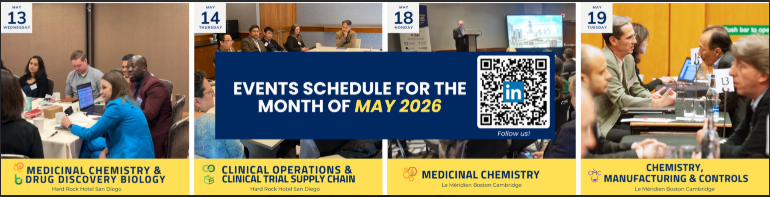
Within the context of the Proventa International Medicinal Chemistry & Drug Discovery Biology Strategy Meeting, the focus on derisking oligonucleotide, mRNA, and plasmid DNA therapeutics highlights the importance of predictive control. The integration of AI into both product and process domains represents a shift toward more deterministic development systems. This approach enables more efficient navigation of complex therapeutic landscapes. It also positions organizations to respond to emerging challenges with greater agility and precision.
Convergence of Scientific Design, Manufacturing Control, and Strategic Execution
The synthesis of Sullivan’s career and current role reveals a consistent emphasis on convergence across scientific and operational domains. His approach integrates molecular design, delivery engineering, and manufacturing control into a unified system. This convergence is essential for nucleic acid therapeutics, where each component influences overall system behavior. The ability to maintain alignment across these domains defines the effectiveness of development efforts. It transforms complexity into a manageable and predictable framework.
Leadership within this context is defined by the ability to design and govern integrated systems rather than manage isolated functions. Sullivan’s experience across academia, industry, and multiple therapeutic platforms informs a holistic perspective on development. This perspective emphasizes coordination, control, and continuous refinement. The system is designed to evolve in response to new data while maintaining structural integrity. This balance between flexibility and discipline is critical for long-term success.
The future trajectory of nucleic acid therapeutics will be shaped by the continued integration of advanced analytics, manufacturing innovation, and regulatory alignment. Organizations that can successfully integrate these elements will achieve greater efficiency and reliability in development. Sullivan’s framework provides a model for this integration, demonstrating how complex systems can be engineered for consistent performance. The emphasis on predictive control and translational alignment will become increasingly important as modalities evolve.
Ultimately, the convergence of leadership, science, and execution defines the next phase of drug development. Sullivan’s work illustrates how these elements can be integrated into a cohesive system capable of addressing complex therapeutic challenges. The architecture he operates within is not static but continuously refined through data and experience. This dynamic system represents the future of pharmaceutical development. It is defined by precision, integration, and strategic foresight.
Learn more about Dr. Sullivan: https://www.linkedin.com/in/sean-sullivan-5b10b37/
Learn more about Arcturus Therapeutics: https://arcturusrx.com/
Engr. Dex Marco Tiu Guibelondo, B.Sc. Pharm, R.Ph.,B.Sc. CompE
Editor-in-Chief, PharmaFEATURES
Subscribe
to get our
LATEST NEWS
Related Posts

Drug Discovery Biology
Governing Multi-Component Therapeutics: Andrea Small-Howard’s Systems Framework at GB Sciences, Inc.
A systems-driven analysis of Dr. Andrea Small-Howard’s leadership at GB Sciences, Inc., detailing how multi-component cannabinoid therapeutics, governance architecture, and AI-enabled discovery are converging to redefine translational drug development.

Drug Discovery Biology
Glue Logic: How Molecular Glue Degraders are Redrawing The Map of Druggability
Molecular glue degraders represent a mechanistic shift from blocking protein function to engineering the cellular conditions under which problematic proteins are selectively destroyed.

Read More Articles





Medicinal Chemistry & Pharmacology
April 14, 2026
Igor Nasonkin and Phythera Therapeutics: Moving Oncology Beyond Single Targets into Engineered Polypharmacologic Systems
Igor Nasonkin’s systems-driven approach at Phythera Therapeutics reframes oncology drug development from single-target inhibition to AI-enabled polypharmacologic network modulation using nature-derived molecular architectures.

Artificial Intelligence and Data Analytics
April 10, 2026
Inside Johnson & Johnson’s External Innovation Engine: Devin Swanson on Translating Integrated Discovery into Strategic Value
Devin Swanson’s leadership at Johnson & Johnson Innovative Medicines redefines external innovation as a tightly governed, AI-enabled translational system integrating multi-modal drug discovery, biomarker strategy, and capital-efficient execution.
Immunology & Oncology
April 9, 2026
From DMPK to Distributed Execution: Mehran F. Moghaddam’s Systems Strategy at OROX BioSciences, Inc.
A systems-level examination of how Mehran F. Moghaddam operationalizes DMPK, externalized R&D, and lipid-mediated therapeutics into a predictive, high-velocity biotech development architecture.
