Unlocking the Future of Drug Discovery with Machine Learning
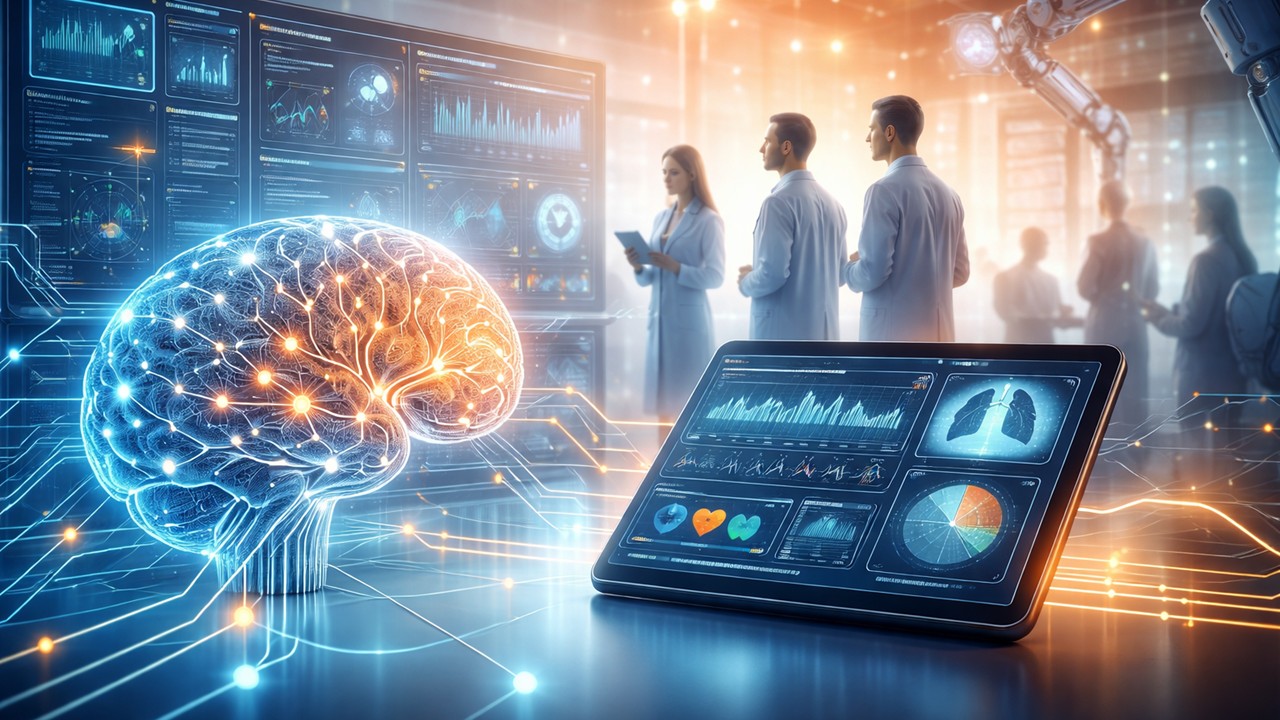
Advances in computational science have revolutionized many fields, including drug discovery. Machine learning (ML), an essential aspect of this revolution, has permeated various scientific and technological domains, leveraging vast datasets to train sophisticated algorithms. While the earliest computer-aided techniques emerged in the 1950s, the true potential of ML in drug discovery has only become evident with the advent of extensive databases and powerful computational tools. The combination of massive biochemical datasets and computational power has allowed scientists to simulate and analyze molecular interactions at unprecedented scales, drastically accelerating the pace of discovery. This shift has moved research from trial-and-error experimentation to data-driven precision modeling. As a result, ML has become the cornerstone of predictive pharmaceutical innovation.
Machine learning’s integration into drug discovery processes marks a significant leap in predictive modeling and data analysis. This computational intelligence facilitates molecular recognition simulations, crucial for identifying potential drug candidates. By analyzing molecular structures and binding affinities, ML models can infer which compounds might exhibit desirable pharmacological effects before any physical synthesis occurs. These algorithms can also predict drug toxicity, optimize molecular stability, and assess solubility—all in silico—reducing costly experimental failures. The synergy between machine learning and molecular biology has transformed early-stage drug screening into a highly efficient, computationally guided process. Consequently, pharmaceutical R&D pipelines now rely increasingly on algorithmic foresight to prioritize viable compounds.
As databases on proteins, ligands, and biological activities expand, ML algorithms can build more accurate predictive models, pushing the frontiers of personalized and precision medicine. The continuous improvement of these models—driven by reinforcement learning, generative adversarial networks, and transformer-based architectures—enables the rational design of molecules tailored to individual genetic profiles. Moreover, the integration of multi-omics data with ML allows scientists to understand how genetic, proteomic, and metabolic variations influence drug response. This convergence is redefining therapeutic strategies, turning patient data into actionable insights that guide drug development. Ultimately, the ongoing evolution of computational learning in drug discovery represents not merely a technological advancement but a paradigm shift toward more intelligent, individualized healthcare.
ML’s Versatility Across Scientific Domains
The application of machine learning extends far beyond drug discovery, influencing nearly every sector that depends on data-driven decision-making. It has become a cornerstone in fields such as autonomous vehicle development, speech recognition, search engines, and cybersecurity. Each of these domains benefits from ML’s ability to detect patterns and adaptively improve performance without explicit programming. For instance, in autonomous driving, neural networks interpret sensor data to make split-second navigation decisions, while in cybersecurity, ML models continuously learn to recognize and respond to novel threats. This ubiquity underscores the transformative nature of ML, which thrives wherever complexity meets vast streams of information. Its interdisciplinary relevance demonstrates how computational intelligence is now integral to technological and scientific evolution.
ML algorithms generally categorize into two primary types: supervised and unsupervised learning. Supervised learning involves training algorithms on labeled datasets, where known inputs correspond to specific outputs, allowing systems to predict outcomes when exposed to new data. Applications of supervised learning include disease classification, fraud detection, and natural language processing, where accuracy improves as models encounter larger, cleaner datasets. Unsupervised learning, by contrast, works with unlabeled data, uncovering hidden structures through clustering or dimensionality reduction. It’s particularly useful for exploring uncharted datasets in genomics or materials science, where underlying relationships are unknown. These two paradigms form the backbone of modern machine learning, shaping the methodologies that drive both theoretical innovation and practical application.
Semi-supervised and reinforcement learning combine elements of both approaches, expanding ML’s capacity to function effectively even with incomplete or dynamic datasets. In semi-supervised learning, small amounts of labeled data guide the interpretation of large volumes of unlabeled data, enabling breakthroughs in fields with limited annotated samples, such as rare disease research. Reinforcement learning, meanwhile, allows models to learn through iterative feedback—optimizing actions based on rewards or penalties. This adaptability proves particularly powerful in drug development, where ML can predict drug–drug interactions, design optimized biomolecules, and analyze complex biomarker patterns. Together, these learning paradigms enhance the entire drug discovery and development pipeline, driving forward a new era where computational learning not only accelerates innovation but also deepens our understanding of biological systems.
Transforming Molecular Docking with Machine Learning
Molecular docking, a critical step in the drug discovery process, benefits immensely from the integration of machine learning techniques. This computational approach simulates how a drug molecule (ligand) interacts with its biological target (receptor), helping predict binding affinity and potential therapeutic efficacy. While machine learning is not a docking technique in itself, it serves as an indispensable enhancement to the overall docking pipeline. By refining the predictive algorithms that evaluate ligand–receptor interactions, ML bridges the gap between theoretical modeling and experimental accuracy. Its adaptability allows researchers to assess vast libraries of compounds more efficiently, reducing the time and cost associated with laboratory-based screening. Consequently, the fusion of traditional docking frameworks with ML-driven insights has redefined computational drug design.
The most significant contribution of machine learning to molecular docking lies in its improvement of scoring functions—the mathematical models used to rank ligand–receptor interactions. Traditional scoring functions often fall short in precision due to their reliance on simplified energy approximations. In contrast, ML algorithms such as Random Forest, Naive Bayesian Classification, and Support Vector Machines can learn from empirical data, generating scoring models that better capture the nuances of molecular binding. These algorithms evaluate thousands of physicochemical descriptors, enabling more accurate predictions of binding affinities and inhibitory potentials. As a result, ML-enhanced scoring functions have become essential tools for prioritizing promising candidates before experimental validation. This approach not only improves accuracy but also allows researchers to detect weak yet meaningful molecular interactions that classical models might overlook.
Deep learning, a specialized branch of machine learning, has further expanded the possibilities of molecular docking by revealing patterns hidden within complex biochemical datasets. Unlike traditional algorithms that require manual feature extraction, deep learning models—particularly convolutional and graph neural networks—automatically learn hierarchical representations of molecular structures. This capability has led to the identification of intricate binding motifs and conformational dynamics that were previously inaccessible through conventional means. Although deep learning’s success in completely replacing classical scoring functions remains moderate, its multi-layered architecture provides a foundation for continuous improvement as training data and computational resources expand. In the coming years, the integration of deep learning into docking workflows is expected to push molecular modeling toward greater precision, bridging computational predictions with real-world biochemical behavior.
Navigating the Challenges of ML in Molecular Docking
Despite the progress, machine learning in molecular docking faces notable challenges. Conformational scoring, essential for virtual screening, remains a complex issue. Traditional scoring functions rely on parametric systems that often fail to adapt to diverse molecular interactions, limiting their flexibility and accuracy.
Moreover, the complexity of ML algorithms can hinder their interpretability and practical application in drug discovery. Ensuring that these algorithms are trained on comprehensive and well-labeled databases is crucial for enhancing their predictive power. The integration of ML algorithms into existing software tools is the next step towards widespread adoption in pharmaceutical research and industry.
Overcoming Data and Application Barriers
The efficacy of machine learning in drug discovery is intrinsically linked to the availability and quality of databases. The expansion of chemical libraries, such as the ZINC database, exemplifies the growth in available data. However, challenges remain in selecting appropriate datasets, coupling large libraries with smaller collections, and assigning accurate labels to vast chemical libraries.
Additionally, the dynamic nature of molecular interactions poses further hurdles. Addressing issues such as ligand and receptor conformational flexibility, efficient binding site sampling, and precise scoring of binding modes are critical for advancing ML applications in molecular docking. Ongoing research and development efforts are increasingly overcoming these obstacles, leading to improved results and more reliable predictive models.
The Road Ahead: Precision and Personalization
Machine learning’s integration into drug discovery heralds a new era of precision and personalized medicine. By leveraging vast datasets and sophisticated algorithms, researchers can develop more effective and targeted therapies. The continuous refinement of ML techniques and their incorporation into practical tools will undoubtedly shape the future of pharmaceutical research, offering new hope for tackling complex diseases and improving patient outcomes.
As the field evolves, the balance between technical rigor and practical application will be paramount. The journey towards fully realizing the potential of machine learning in drug discovery is ongoing, but the advancements thus far provide a glimpse into a future where computational intelligence drives innovation and therapeutic breakthroughs.
Engr. Dex Marco Tiu Guibelondo, B.Sc. Pharm, R.Ph., B.Sc. CpE
Subscribe
to get our
LATEST NEWS
Related Posts

Artificial Intelligence and Data Analytics
Inside Johnson & Johnson’s External Innovation Engine: Devin Swanson on Translating Integrated Discovery into Strategic Value
Devin Swanson’s leadership at Johnson & Johnson Innovative Medicines redefines external innovation as a tightly governed, AI-enabled translational system integrating multi-modal drug discovery, biomarker strategy, and capital-efficient execution.

Artificial Intelligence and Data Analytics
From Data to Decision: Shicheng Guo’s Systems Approach to AI-Enabled Drug Development
A systems-level analysis of how Shicheng Guo is architecting AI-driven, human data–centric drug development at Arrowhead Pharmaceuticals.

Artificial Intelligence and Data Analytics
Digital Stewardship: Governing Access, Transparency, and Accountability in Clinical Data Warehouses
Clinical data warehouse governance determines how integrated health data can be responsibly accessed, shared, and reused to enable modern biomedical research.
Read More Articles





Medicinal Chemistry & Pharmacology
April 14, 2026
Igor Nasonkin and Phythera Therapeutics: Moving Oncology Beyond Single Targets into Engineered Polypharmacologic Systems
Igor Nasonkin’s systems-driven approach at Phythera Therapeutics reframes oncology drug development from single-target inhibition to AI-enabled polypharmacologic network modulation using nature-derived molecular architectures.

Immunology & Oncology
April 9, 2026
From DMPK to Distributed Execution: Mehran F. Moghaddam’s Systems Strategy at OROX BioSciences, Inc.
A systems-level examination of how Mehran F. Moghaddam operationalizes DMPK, externalized R&D, and lipid-mediated therapeutics into a predictive, high-velocity biotech development architecture.
