Translational Toxicology as a Systems Discipline in Nonclinical Architecture
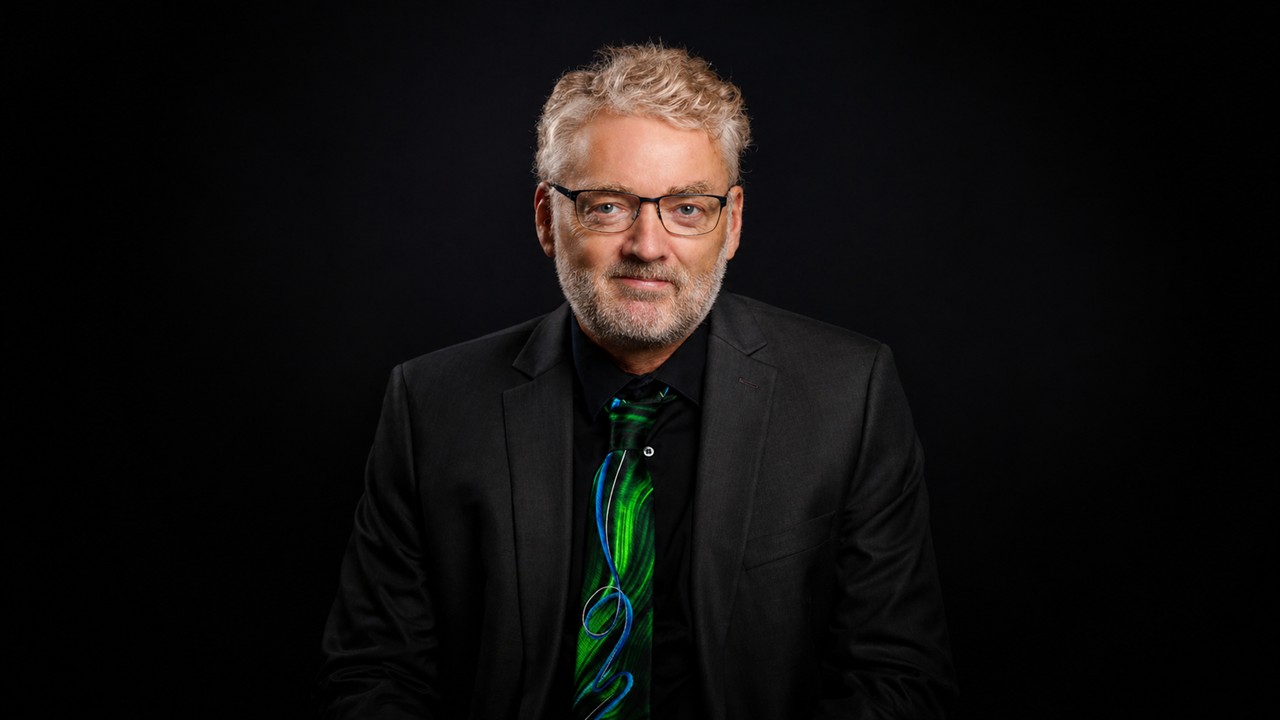
Sanjeev Thohan’s career trajectory reflects a deliberate convergence toward systems-level control of nonclinical development rather than domain-specific specialization. His academic grounding in pharmacology and toxicology established an early orientation toward mechanistic causality, particularly in drug metabolism, bioactivation pathways, and systems toxicology. This foundation enabled a consistent framing of drug development as a multi-variable system governed by interdependent pharmacokinetic, pharmacodynamic, and safety constraints. Across early roles at Walter Reed Army Institute of Research and Covance Laboratories, he operated at the interface of in vitro and in vivo systems, building analytical pipelines that linked experimental data streams to regulatory-grade outputs. Rather than treating toxicology as a downstream filter, his work integrated it as an upstream design constraint influencing candidate selection and optimization.
This systems framing became more explicit during his tenure at AstraZeneca and ViroPharma, where high-throughput assay development and metabolic pathway elucidation were embedded into iterative medicinal chemistry cycles. Here, translational alignment was not an abstract objective but a governed process, where ADME and DMPK data informed structural refinements in near real-time. The operational architecture required tight coupling between analytical chemistry, biology, and clinical foresight, effectively compressing the feedback loop between discovery and development. This approach reduced attrition by enforcing early elimination criteria grounded in mechanistic evidence rather than probabilistic screening. The result was a shift from linear progression models to adaptive systems governed by data density and interpretability.
At Exelixis and later Novartis, Thohan extended this model into enterprise-scale program governance. His role in advancing compounds through IND-enabling studies required integrating toxicology, pharmacology, and regulatory documentation into a unified decision framework. The emphasis on interspecies scaling and first-in-human dose projection introduced an additional layer of systems complexity, where quantitative modeling became central to risk mitigation. These activities necessitated not only scientific rigor but also operational discipline, as timelines, resource allocation, and regulatory interactions were tightly interwoven. The architecture of decision-making shifted toward structured go/no-go gates informed by multi-dimensional data streams.
This progression culminated in a distinct philosophy: nonclinical development as a predictive control system rather than a validation phase. His track record of advancing multiple compounds into clinical development underscores the effectiveness of this approach in reducing uncertainty across the development lifecycle. The integration of mechanistic toxicology, quantitative modeling, and regulatory foresight created a framework where each experimental output contributed to a broader system model. This model, in turn, guided strategic decisions with a level of precision not achievable through fragmented workflows. The career arc thus represents not accumulation of expertise, but refinement of a system designed to translate biological complexity into executable development strategy.
Multi-Variable Optimization in Small Molecule and Challenging Target Modalities
The core scientific domain underlying Thohan’s work is the optimization of small molecule therapeutics within highly constrained biological systems. His experience spans oncology, metabolic disease, cardiovascular conditions, and infectious diseases, each presenting distinct pharmacological and toxicological landscapes. Rather than treating these as separate domains, his approach abstracts them into parameterized systems defined by exposure, target engagement, and safety margins. This abstraction enables cross-therapeutic learning, where principles derived in one context inform decision-making in another. The advancement of over forty compounds into clinical stages reflects a consistent application of this systems-based optimization.
In the context of challenging modalities—such as kinases, allosteric sites, and protein degraders—the complexity increases significantly due to non-linear pharmacodynamics and context-dependent biology. These targets often exhibit narrow therapeutic windows, off-target liabilities, and complex feedback mechanisms within signaling networks. Thohan’s framework addresses this by integrating ADME, PK/PD modeling, and mechanistic toxicology into a unified optimization loop. Rather than sequentially resolving efficacy and safety, both are co-optimized through iterative cycles informed by high-density data. This reduces the risk of late-stage failures driven by unanticipated interactions within biological systems.
The feedback architecture between medicinal chemistry and biological evaluation is central to this process. Structural modifications are not evaluated in isolation but in the context of system-level responses, including metabolic stability, bioactivation potential, and tissue-specific exposure. High-throughput bioanalytical methods and robust data pipelines enable rapid iteration, effectively increasing the resolution of the optimization process. This transforms candidate selection from a heuristic exercise into a data-driven convergence problem. The system evolves toward compounds that satisfy multi-dimensional constraints rather than maximizing a single parameter.
This multi-variable optimization is particularly critical in addressing so-called “undruggable” targets, where traditional approaches fail due to structural or functional limitations. By reframing these challenges as system design problems, new solution spaces emerge, including indirect modulation, allosteric intervention, and degradation-based strategies. The scientific complexity is matched by operational complexity, requiring coordinated efforts across disciplines and functions. The result is not merely the identification of viable candidates, but the construction of a system capable of consistently generating them. This distinction defines the difference between isolated success and scalable innovation in drug discovery.
LatentSpace Therapeutics and the Architecture of Selective Scientific Execution
In his role as Chief Scientific Officer at LatentSpace Therapeutics, Thohan operates within a strategic framework that prioritizes selective execution over portfolio breadth. The company’s positioning in stealth mode reflects a deliberate approach to scientific disclosure, aligning external communication with internal validation milestones. This strategic restraint is indicative of a governance model that emphasizes data integrity and decision discipline. Rather than pursuing expansive pipelines, the focus is on constructing a tightly controlled system where each asset is developed within a rigorously defined parameter space. This approach reduces noise in decision-making and enhances the signal derived from experimental data.
The operational architecture is built around cross-functional integration, with nonclinical, translational, and regulatory functions aligned from the earliest stages of development. Program management is not treated as an administrative layer but as a central coordinating mechanism that enforces consistency across workflows. This includes the establishment of clear decision gates, standardized data formats, and synchronized timelines across functions. The PMO structure ensures that deviations from expected system behavior are identified and addressed early, preventing downstream compounding of errors. This level of control is particularly important in environments dealing with high scientific uncertainty.
Scientific selectivity is further reinforced through stringent go/no-go criteria grounded in mechanistic understanding and quantitative thresholds. ADME, DMPK, and toxicology data are not merely descriptive but are used to construct predictive models that inform strategic decisions. This reduces reliance on empirical iteration and increases confidence in forward projections. The integration of these models into governance processes ensures that decisions are both data-driven and reproducible. The result is a development architecture that balances flexibility with control, enabling adaptation without compromising rigor.
This model positions LatentSpace Therapeutics as an organization designed for precision rather than scale. The emphasis on system integrity over pipeline expansion reflects a recognition that sustainable innovation requires disciplined execution. By embedding scientific and operational rigor into its core architecture, the company creates a foundation for consistent performance across development programs. This approach is particularly relevant in an industry increasingly characterized by complexity and uncertainty. It represents a shift from opportunistic development to engineered outcomes.
Predictive Trial Intelligence and the Integration of AI in Development Systems
The integration of artificial intelligence into drug development represents a natural extension of the systems-based approach that defines Thohan’s work. AI is not treated as a standalone capability but as an augmentation of existing data pipelines and decision frameworks. In the context of nonclinical development, this includes the use of machine learning models to predict metabolic pathways, toxicity profiles, and pharmacokinetic behavior. These models enhance the resolution of system-level understanding, enabling more precise identification of optimal parameter spaces. The result is a reduction in uncertainty prior to clinical entry.
In clinical development, predictive trial intelligence emerges as a critical application of AI, particularly in the design and execution of early-phase studies. By integrating historical data, real-time biomarkers, and patient stratification algorithms, trial designs can be optimized for efficiency and signal detection. This is particularly important for challenging modalities and targets, where traditional trial designs may lack sensitivity to detect meaningful effects. The alignment of nonclinical predictions with clinical observations creates a feedback loop that continuously refines the system model. This iterative process enhances both the speed and reliability of development.
The governance implications of AI integration are significant, requiring new frameworks for validation, transparency, and regulatory compliance. Models must be interpretable and reproducible, with clear documentation of assumptions and limitations. This aligns with the broader emphasis on regulatory discipline within Thohan’s approach, where every component of the system is subject to scrutiny and validation. The incorporation of AI thus extends the existing governance architecture rather than replacing it. It adds a layer of predictive capability while maintaining the integrity of decision processes.
Within the context of the Proventa International Medicinal Chemistry & Drug Discovery Biology Strategy Meeting, the focus on AI-driven design for challenging modalities highlights the convergence of scientific complexity and computational capability. The discussion extends beyond tool adoption to system integration, where AI becomes an embedded component of the development architecture. This reflects a broader industry shift toward predictive, data-driven models of drug development. The implications are not merely incremental improvements but a fundamental reconfiguration of how development systems are designed and operated.
Convergence of Leadership, Science, and Execution in Future Development Architectures
The synthesis of Thohan’s career, scientific approach, and current role reveals a consistent emphasis on convergence across domains. Leadership is defined not by hierarchical control but by the ability to design and manage complex systems that integrate diverse functions. Scientific rigor is maintained through mechanistic understanding and quantitative modeling, ensuring that each component of the system contributes to a coherent whole. Execution is governed by structured processes and disciplined decision-making, enabling consistent performance across programs. This convergence creates a development architecture capable of navigating high levels of uncertainty.
The integration of multiple system layers—career-derived frameworks, asset-level optimization, company-level governance, and industry-level innovation—results in a cohesive model for drug development. Each layer reinforces the others, creating a feedback structure that enhances overall system performance. This is particularly important in the context of increasingly complex therapeutic modalities and regulatory environments. The ability to maintain alignment across these layers is a defining characteristic of effective leadership in modern biotech. It distinguishes systems thinkers from domain specialists.
Looking forward, the incorporation of AI and advanced analytics will further increase the complexity of development systems. However, the underlying principles of governance, translational alignment, and cross-functional integration remain constant. The challenge lies in extending these principles to new domains without compromising system integrity. This requires continuous adaptation and refinement of both scientific and operational frameworks. The future of drug development will be defined by organizations that can successfully navigate this evolving landscape.
In this context, Thohan’s work represents a model for how leadership, science, and execution can be integrated into a unified system. The emphasis on predictive control, data-driven decision-making, and disciplined governance provides a blueprint for future development architectures. As the industry moves toward more complex and data-intensive models, these principles will become increasingly critical. The trajectory suggests not only a continuation of current trends but an acceleration toward fully integrated, predictive systems. This evolution will redefine the boundaries of what is possible in drug discovery and development.
Learn more about Dr. Thohan: https://www.linkedin.com/in/sanjeevthohan/
Learn more about LatentSpace Therapeutics: https://latentspacetherapeutics.com/
Engr. Dex Marco Tiu Guibelondo, B.Sc. Pharm, R.Ph.,B.Sc. CompE
Editor-in-Chief, PharmaFEATURES
Subscribe
to get our
LATEST NEWS
Related Posts

Drug Discovery Biology
Governing Multi-Component Therapeutics: Andrea Small-Howard’s Systems Framework at GB Sciences, Inc.
A systems-driven analysis of Dr. Andrea Small-Howard’s leadership at GB Sciences, Inc., detailing how multi-component cannabinoid therapeutics, governance architecture, and AI-enabled discovery are converging to redefine translational drug development.

Drug Discovery Biology
Derisking Nucleic Acid Therapeutics: Sean Sullivan on CMC-Integrated Strategy at Arcturus Therapeutics
Sean Sullivan of Arcturus Therapeutics outlines how CMC-integrated strategy is derisking mRNA, oligonucleotide, and plasmid DNA therapeutics.

Read More Articles




Medicinal Chemistry & Pharmacology
April 14, 2026
Igor Nasonkin and Phythera Therapeutics: Moving Oncology Beyond Single Targets into Engineered Polypharmacologic Systems
Igor Nasonkin’s systems-driven approach at Phythera Therapeutics reframes oncology drug development from single-target inhibition to AI-enabled polypharmacologic network modulation using nature-derived molecular architectures.

Artificial Intelligence and Data Analytics
April 10, 2026
Inside Johnson & Johnson’s External Innovation Engine: Devin Swanson on Translating Integrated Discovery into Strategic Value
Devin Swanson’s leadership at Johnson & Johnson Innovative Medicines redefines external innovation as a tightly governed, AI-enabled translational system integrating multi-modal drug discovery, biomarker strategy, and capital-efficient execution.
Immunology & Oncology
April 9, 2026
From DMPK to Distributed Execution: Mehran F. Moghaddam’s Systems Strategy at OROX BioSciences, Inc.
A systems-level examination of how Mehran F. Moghaddam operationalizes DMPK, externalized R&D, and lipid-mediated therapeutics into a predictive, high-velocity biotech development architecture.
