Licensing to Launch: How Origins Are Prepared for Helical Work
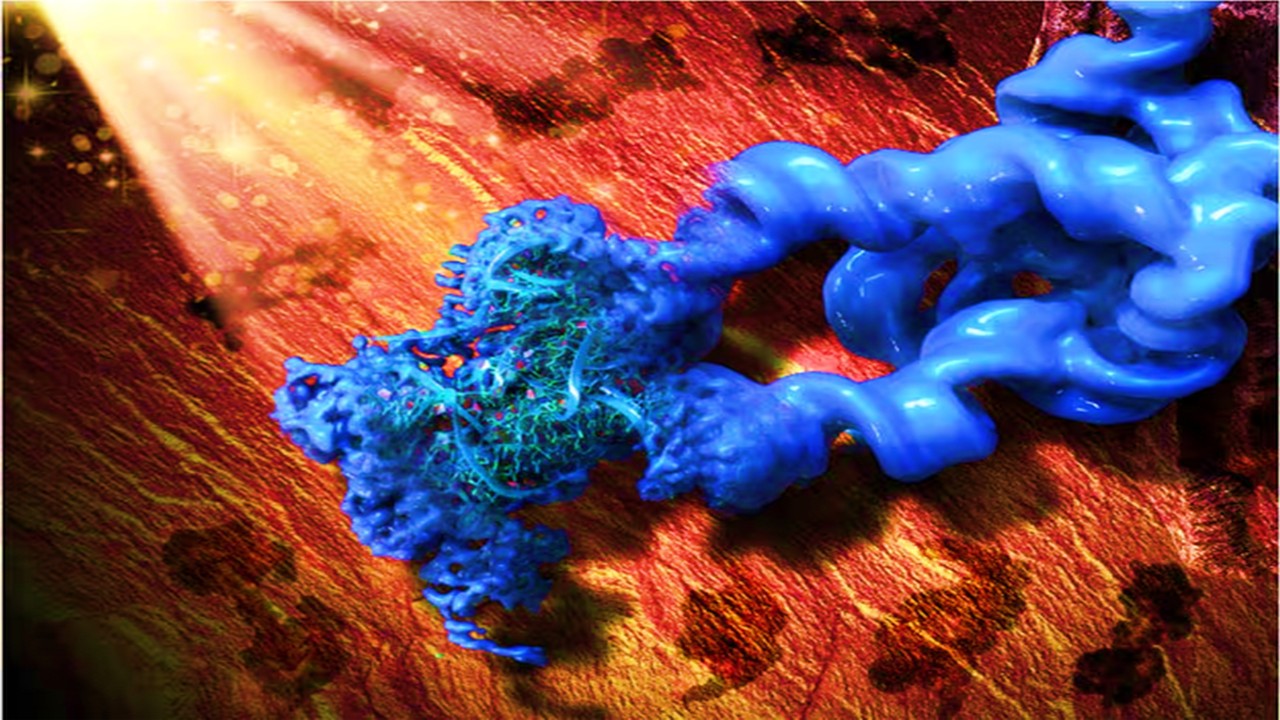
The eukaryotic cell commits to genome duplication by transforming licensed origins into active replication forks with molecular precision. In late mitosis and G1, Orc, Cdc6, and Cdt1 load Mcm2–7 as a head-to-head double hexamer around duplex DNA, establishing a silent intermediate that is catalytically poised yet restrained. S phase inputs then convert this double hexamer into the Cdc45–Mcm2–7–GINS (CMG) helicase, which is the eleven-subunit engine that produces single-stranded DNA for polymerases. The conversion requires two kinase axes, S-phase cyclin-dependent kinase and Dbf4-dependent kinase, whose phosphorylation events license factor exchange and mechanical activation. S-phase cyclin-dependent kinase phosphorylates Sld2 and Sld3 so that Dpb11 scaffolds their ternary assembly and couples origin melting to replisome engagement. Dbf4-dependent kinase phosphorylates sites on Mcm2, Mcm4, and Mcm6 that remodel the Mcm2–7 surface for partner capture, with Mcm4 functioning as a privileged input node.
These biochemical transitions are not mere decorations on a static ring; they reconfigure contact surfaces that control who can dock and when. When Mcm2–7 sits as a free single hexamer in solution, its topology displays distinct spatial relationships among subunits that differ from the DNA-loaded state. Loading onto duplex DNA organizes the double hexamer so that the amino-terminal regions of neighboring subunits from opposing rings juxtapose across the midplane. This geometric reorganization exposes or occludes docking surfaces for initiation factors in a way that makes loading-specific interactions possible. Because recruitment events depend on both phosphorylation state and DNA-bound architecture, the double hexamer becomes a logic gate that integrates structural and chemical inputs. The system thus prevents adventitious assembly on unscheduled templates while enabling decisive assembly on licensed origins.
Within this logic architecture, Cdc45 and GINS are not equivalent passengers because each recognizes a distinct composite surface. Sld3 guides Cdc45 to kinase-modified Mcm2–7, while GINS requires a different combination of cues that includes Dpb11 itself. The distinctiveness of these handoffs explains why partial defects can spare one recruitment pathway while crippling the other. For example, conditions that maintain Cdc45 binding despite origin dysfunction can still abolish GINS recruitment and block CMG formation. The separation of routes ensures robustness, because redundant cues are unlikely to fail concurrently in the same way. It also creates regulatory bandwidth, allowing cells to tune initiation density by modulating factor-specific thresholds.
Origin activation culminates in origin melting and extrusion of single-stranded DNA from the central channel of Mcm2–7. That mechanical event feeds back into the recruitment logic because proteins that initially guard Mcm2–7 surfaces are redistributed onto nascent single-stranded DNA. This redistribution frees binding sites for late factors while locking in the directionality of assembly. The interdependence between DNA structural state and recruitment competence makes the system self-advancing rather than merely permissive. By tying recruitment to melting, cells prevent futile cycles in which factors assemble on rings that never unwind. This coupling prepares the stage for a kinase-sensitive amplifier centered on Mcm4 and Dpb11.
The licensing-to-launch switch thus sets up a scenario in which a local phosphorylation event can be magnified into helicase assembly. A scaffold that can both sense phosphorylation and recruit enzymes becomes particularly valuable in such a context. Dpb11 occupies precisely that role, integrating S-phase cyclin-dependent kinase signals with contacts to Mcm4 and, through it, to Dbf4-dependent kinase. When the double hexamer is in place, this scaffold can concentrate a kinase near its principal substrate to accelerate a local reaction. The result is a positive reinforcement loop that sharpens the decision to proceed with helicase assembly. This loop is the subject of the next section, where the amplifier is resolved into specific domains, interfaces, and outcomes.
Dpb11 as Kinase Adaptor: Building a Positive Amplifier at Mcm4
Dpb11 binds directly to Mcm4 and to Dbf4, positioning Dbf4-dependent kinase where it can phosphorylate Mcm4 with maximal efficiency. The relevant recognition module resides in the BRCT4 motif of Dpb11, which is a phospho-reader–like domain with affinity for phosphorylated partners. In vitro pulldown experiments with purified proteins show that Dpb11 engages Mcm4 even without prior modification, and this basal binding recruits Dbf4-dependent kinase to its substrate. Once the kinase deposits phosphate onto the amino-terminal region of Mcm4, the affinity of Dpb11 for Mcm4 increases markedly, creating a feed-forward gain in local scaffold density. This increase in local scaffold density raises the effective concentration of the kinase at the same site, producing accelerated phosphorylation on neighboring residues. In physical terms, the system tailors both on-rates and residence times to favor multi-site modification in a narrow spatial domain.
This amplifier can be reconstructed with phosphomimetic mutants of Mcm4 that replace consensus sites with aspartate and thereby simulate the negative charge of phosphorylation. When those substitutions are introduced into the DNA-loaded Mcm2–7 complex, Dpb11 binding increases for the loaded state where the geometry is native. The effect is not reproduced when the same substitutions are present in free single-hexameric Mcm2–7, underscoring the requirement for the DNA-bound architecture. The loaded double hexamer aligns the Mcm4 amino terminus so that Dpb11 can bridge from a modified Mcm4 on one ring to a target surface on the other ring. By contrast, in the free hexamer, the inter-subunit distances and angles frustrate this interhexameric bridge. The geometry thus determines whether phosphorylation information can be converted into a recruitment event.
A separation-of-function series within BRCT4 identifies charged residues whose reversal selectively disrupts the Mcm4 interface without impairing other Dpb11 functions. A quadruple mutant combining these substitutions eliminates binding to Mcm4 while preserving binding to S-phase cyclin-dependent kinase–phosphorylated Sld2 and Sld3, to GINS, and to single-stranded DNA. This specificity demonstrates that the Mcm4-facing pocket is chemically distinct from the pockets that read the canonical S-phase cyclin-dependent kinase phosphorylation epitopes. Because the mutant scaffold still recognizes the Sld2 and Sld3 ligands, defects observed in cells cannot be attributed to global scaffold failure. The finding instead isolates a role for the Dpb11–Mcm4 contact in steps that rely on Dbf4-dependent kinase proximity. It thereby validates the amplifier model in vivo.
The amplifier extends across species boundaries, with human TopBP1 acting analogously to Dpb11 and human Dbf4-dependent kinase targeting human Mcm4. The cross-kingdom conservation is revealing because the details of origin architecture differ across eukaryotes, yet the need to locally amplify a phosphorylation signal remains. By using a shared principle of phosphorylation-enhanced recruitment, cells solve the same engineering problem with homologous modules. The conservation suggests that the amplifier enhances initiation fidelity, a selective advantage that would be retained. As a modular solution, it can evolve by tuning interface chemistries without abandoning the overall scheme. That adaptability is consistent with the diversity of Mcm4 phosphorylation patterns observed in human reactions.
Taken together, these data define Dpb11 as a dual-function adaptor that both positions Dbf4-dependent kinase at its target and senses the completion of that phosphorylation to strengthen its hold. The first function seeds the reaction, and the second captures the gain, closing a self-reinforcing loop. Because the loop is tied to the DNA-loaded geometry of Mcm2–7, it operates where helicase assembly must occur and nowhere else. The output of the loop is not an abstract phosphorylation count but a recruitment-competent platform. In the next section, the platform’s principal client—GINS—arrives through an interhexameric handoff that depends on this very phosphorylation landscape. The amplifier thus passes its influence forward into the mechanical core of CMG construction.
Interhexamer Handoff: Dpb11 Carries GINS to Phosphorylated, DNA-Loaded Mcm2–7
GINS recruitment to Mcm2–7 depends on both DNA loading and Dbf4-dependent kinase modification of Mcm4, and Dpb11 provides the carrier function. When the double hexamer bearing phosphomimetic Mcm4 is incubated with Dpb11, radiolabeled GINS binds to DNA-loaded Mcm2–7 with a marked gain compared with wild-type Mcm4. Free single hexamers do not show this gain, indicating that double-hexamer geometry is a prerequisite for the Dpb11-mediated handoff. The most plausible physical interpretation is that Dpb11 recognizes phosphorylated Mcm4 on one ring while simultaneously positioning GINS to engage Mcm5 and Mcm3 on the partner ring. This interhexameric orientation allows a single scaffold to translate a chemical mark on one subunit into a mechanical assembly across the interface. The model dovetails with electron microscopy that places the Mcm4 amino terminus adjacent to Mcm5 of the opposing ring in the loaded state.
The economics of such a handoff are elegant because the scaffold uses phosphorylation as both a zip code and a timing signal. Phosphorylation by Dbf4-dependent kinase on Mcm4 means that Dpb11 has already amplified the local kinase reaction, thereby validating the site for downstream assembly. The same event favors replacement of early initiation factors with late ones by increasing the local density of Dpb11, which has binding sites for both classes of clients. In parallel, S-phase cyclin-dependent kinase phosphorylates Sld2 and Sld3 to control their association with Dpb11 and with DNA structures that emerge upon origin melting. As single-stranded DNA is extruded, Sld2 is sequestered away from the Mcm2–7 surface where it previously blocked GINS docking. The sequence of events thus clears the landing pad just as the carrier arrives with the passenger.
The role of Dpb11 in this GINS handoff is not generic bridging but conditional delivery based on the DNA-bound state and phosphorylation pattern. In the absence of Mcm4 phosphorylation, GINS binding remains weak even if Dpb11 is present, which shows that phosphorylation is not simply incidental. When the BRCT4 mutant of Dpb11—one that cannot bind Mcm4—replaces the wild type, GINS recruitment fails despite intact interactions with other partners. The failure is observed both in reconstituted systems and in cells, where GINS occupancy at early origins is reduced while Cdc45 occupancy is maintained. The divergence between the two clients underscores that the platform is multi-valent and that the amplifier specifically empowers the GINS trajectory. This division of labor ensures that Cdc45 recruitment can proceed under a wider range of conditions while GINS recruitment remains tightly gated.
An interhexameric model explains why GINS recruitment is sensitive to geometry rather than simply to local abundance of factors. Dpb11 docked onto phosphorylated Mcm4 stabilizes a trajectory that points toward Mcm5/Mcm3 across the interface, which is a configuration impossible to replicate on a free single hexamer. The dependence on DNA-loading thus ensures that GINS is delivered only to the correct architectural state that is competent for fork activation. Because Dpb11 also binds single-stranded DNA, it can maintain proximity as origin melting proceeds, smoothing the temporal handoff into CMG. The choreography converts a chemical amplifier into a mechanical assembly decision that is executable only at a licensed, activated origin. In the next section, genetic tests in budding yeast demonstrate how specifically disrupting the Mcm4-facing pocket decouples these steps in vivo.
Genetic Separation of Function: A BRCT4 Gate Controls Helicase Assembly in Cells
A Dpb11 allele engineered to reverse key charges within BRCT4 abolishes Mcm4 binding without broadly damaging the scaffold’s other interactions. Cells in which endogenous Dpb11 is degraded and replaced with this allele show impaired growth and defective bulk DNA replication under restrictive conditions. Biochemical readouts from chromatin fractions reveal diminished mobility shifts of Mcm4 that mark Dbf4-dependent kinase hyperphosphorylation during S-phase entry. The reduction is not absolute, implying that basal kinase access to Mcm4 still occurs but that local amplification is lost. The remaining phosphorylation suffices for recruitment of Cdc45 at early origins, as measured by chromatin immunoprecipitation. In contrast, GINS recruitment is significantly reduced, indicating a specific collapse of the GINS arm of the initiation program.
Co-immunoprecipitation of loaded Mcm2–7 complexes from these mutant cells preserves the association with Cdc45 while weakening the association with Psf1, which is a GINS subunit. The maintenance of the Cdc45 interaction demonstrates that the Sld3-dependent route can proceed without the Dpb11–Mcm4 amplifier. The weakening of the GINS interaction confirms that the amplifier is a dedicated gate for GINS assembly on DNA-loaded Mcm2–7. Because the Dpb11 allele retains binding to S-phase cyclin-dependent kinase–phosphorylated Sld2 and Sld3 and to GINS itself, the defect maps specifically to the inability to engage Mcm4. That mapping validates the physical model in which the BRCT4 pocket is the contact site that senses and strengthens Mcm4 phosphorylation. By eliminating this pocket, cells neutralize the positive feedback loop and starve GINS recruitment of its delivery mechanism.
Flow cytometry further corroborates the replication defect by showing delayed or incomplete S-phase progression in the BRCT4-mutant background. The phenotype is not consistent with a checkpoint-only effect because the initiation factor program is measurably impaired at the level of origin-bound assemblies. Western blots show that Dpb11 protein levels are comparable between wild-type complementation and the mutant, ruling out dosage artifacts. The data therefore isolate a qualitative defect in a single interface that ripples forward into a quantitative dismantling of helicase assembly. The specificity of the lesion is crucial because it allows direct attribution of in vivo outcomes to the biophysics of a single domain. That attestation is difficult to achieve in replication biology, where many interfaces are cooperative or redundant.
The genetic data also illuminate how the two kinase pathways are functionally coupled yet separable. The S-phase cyclin-dependent kinase–dependent ternary complex with Dpb11 persists in the BRCT4 mutant, and Cdc45 loading remains robust at early origins. However, the Dbf4-dependent kinase arm that relies on Dpb11 proximity to Mcm4 does not amplify, leaving GINS delivery stranded. By modulating one pocket of Dpb11, the experiment reweights pathway contributions without altering kinase concentrations or timing globally. This kind of selective retuning clarifies causality in a system rich in feedback and feed-forward connections. With the amplifier disabled, the cell attempts to proceed with incomplete CMG, and the attempt stalls. The final section integrates these mechanistic parts into a two-step assembly logic that explains both the ordering and the exclusivity of the events.
Systems Logic of CMG Construction: Dual-Kinase Orchestration and Origin State Transitions
The assembly of CMG follows a two-step logic in which S-phase cyclin-dependent kinase and Dbf4-dependent kinase act on distinct substrates whose products converge on Dpb11. First, S-phase cyclin-dependent kinase phosphorylates Sld2 and Sld3, enabling Dpb11 to scaffold their association and to couple to early origin DNA structures. Second, Dbf4-dependent kinase phosphorylates Mcm4 within the loaded double hexamer, creating a high-affinity Dpb11 landing site that becomes the staging ground for GINS delivery. Dpb11 thus functions as a convergent node that reads both phospho-codes and makes docking decisions contingent on DNA-bound geometry. Polymerase epsilon contributes to this convergence by binding both Dpb11 and GINS, promoting a productive handoff into the polymerase-helicase core. The handoff is enforced by origin melting, which reallocates Sld2 away from the Mcm2–7 surface and opens the GINS-facing slot.
This systems view explains why the amplifier centered on Mcm4 is both necessary and sufficient for the GINS limb of the pathway while being dispensable for the Cdc45 limb. GINS must arrive only at origins that have executed the architectural transition into a DNA-loaded, phosphorylated state, a condition verified by Dpb11’s BRCT4-mediated recognition. Cdc45, by contrast, can be recruited through Sld3-dependent routes with less dependence on this specific amplifier, allowing earlier or parallel occupancy that prepares the complex. The ordering reduces the risk of forming nonproductive assemblies because the helicase becomes GINS-competent only when the loaded architecture is present and marked. In practical terms, the dual-kinase scheme decongests initiation by distributing control across orthogonal axes. The result is a coherent construction of CMG that is resilient to local noise but sensitive to the correct integration of signals.
Conservation of this logic is reinforced by the observation that human TopBP1 substitutes for Dpb11 in stimulating human Dbf4-dependent kinase phosphorylation of human Mcm4. The pattern of modification across human Mcm4 suggests that multiple sites are phosphorylated with varying efficiencies, providing a tunable code rather than a binary switch. A graded code is well-suited to a positive amplifier because it allows incremental reinforcement rather than an all-or-none leap. As with budding yeast, DNA loading likely gates whether the amplifier can translate chemical marks into mechanical assembly. The conserved architecture of BRCT-like domains and their affinity for phosphorylated epitopes aligns with this functional expectation. Together, the observations argue that the amplifier is a general design principle of eukaryotic origin firing.
The translational implications touch genome stability and cancer biology because mutations in CMG components or in Dbf4-dependent kinase/TopBP1 axes are frequent in tumors. If Dpb11/TopBP1–Mcm4 engagement is compromised, cells may initiate fewer forks, prolong S phase, and accumulate replication stress. Conversely, hyperactivation of the amplifier could drive inappropriate origin firing, exhaust nucleotide pools, and create DNA damage. Small molecules that modulate BRCT4-like pockets or alter Mcm4 phosphorylation kinetics could, in principle, tune initiation density. Any such intervention would need to respect the geometry dependence that restricts action to DNA-loaded complexes. Exploiting that dependence may provide selectivity that is otherwise hard to achieve in kinase-rich networks.
Finally, the amplifier provides a conceptual anchor for integrating biochemical reconstitution with in vivo genetics and structural models. Reconstitution clarifies sufficiency, genetics establishes necessity, and structural work provides the blueprint for interhexameric delivery. The three lines of evidence converge on a mechanism in which Dpb11 concentrates Dbf4-dependent kinase at Mcm4, senses the phosphorylation it helped to install, and then escorts GINS across the double-hexamer interface. That escort depends on the loaded geometry and on the relief of Sld2 competition that arises during origin melting. The choreography yields a helicase that is built at the right place and time, with a feedback loop ensuring decisiveness. With the loop understood, researchers can now ask how cells bias its gain across the genome to shape replication timing programs.
Study DOI: https://doi.org/10.1074/jbc.M116.772368
Engr. Dex Marco Tiu Guibelondo, B.Sc. Pharm, R.Ph., B.Sc. CpE
Editor-in-Chief, PharmaFEATURES

Subscribe
to get our
LATEST NEWS
Related Posts

Drug Discovery Biology
Governing Multi-Component Therapeutics: Andrea Small-Howard’s Systems Framework at GB Sciences, Inc.
A systems-driven analysis of Dr. Andrea Small-Howard’s leadership at GB Sciences, Inc., detailing how multi-component cannabinoid therapeutics, governance architecture, and AI-enabled discovery are converging to redefine translational drug development.

Drug Discovery Biology
Derisking Nucleic Acid Therapeutics: Sean Sullivan on CMC-Integrated Strategy at Arcturus Therapeutics
Sean Sullivan of Arcturus Therapeutics outlines how CMC-integrated strategy is derisking mRNA, oligonucleotide, and plasmid DNA therapeutics.

Read More Articles





Medicinal Chemistry & Pharmacology
April 14, 2026
Igor Nasonkin and Phythera Therapeutics: Moving Oncology Beyond Single Targets into Engineered Polypharmacologic Systems
Igor Nasonkin’s systems-driven approach at Phythera Therapeutics reframes oncology drug development from single-target inhibition to AI-enabled polypharmacologic network modulation using nature-derived molecular architectures.

Artificial Intelligence and Data Analytics
April 10, 2026
Inside Johnson & Johnson’s External Innovation Engine: Devin Swanson on Translating Integrated Discovery into Strategic Value
Devin Swanson’s leadership at Johnson & Johnson Innovative Medicines redefines external innovation as a tightly governed, AI-enabled translational system integrating multi-modal drug discovery, biomarker strategy, and capital-efficient execution.

Immunology & Oncology
April 9, 2026
From DMPK to Distributed Execution: Mehran F. Moghaddam’s Systems Strategy at OROX BioSciences, Inc.
A systems-level examination of how Mehran F. Moghaddam operationalizes DMPK, externalized R&D, and lipid-mediated therapeutics into a predictive, high-velocity biotech development architecture.
